
American Flag Drawing
📖 Table of Contents
- How to Start the American Flag Drawing Process
- Choosing the Right Materials
- Teaching Kids About the Flag's Symbolism
- Making the Activity Fun and Interactive
- Encouraging Creativity and Individuality
- Creating a Lasting Memory
- Making the Activity Accessible for All Ages
- Make It Your Way
- Frequently Asked Questions
There's something magical about watching your child's hands move across paper, creating something that represents something bigger than themselves. I remember the first time I sat down with my daughter to draw the American flag — she was just five. We had spent the morning learning about the meaning behind each stripe and star. It was messy, we used crayons that bled through the paper, and she cried when the red wasn't bright enough. But when she finally held up her finished flag, I saw the pride in her eyes and knew this was more than just an art project. It was a lesson in history, identity, and creativity all at once.
The American flag drawing is not just a way to teach kids about patriotism — it's a hands-on lesson in patience, precision, and the value of trying again when things don't go perfectly. I've done this activity with kids of all ages, from toddlers who use their fingers to press colors onto paper, to teenagers who sketch intricate details with pens. What I've learned is that the process is just as important as the final product. Every time, I see their eyes light up when they recognize the stripes and stars as symbols of something real and meaningful — and that's when I know it's working.
For parents who want to connect with their kids in a meaningful way, the American flag drawing is a powerful tool. It doesn't require any special equipment, and it can be done in under 30 minutes. I've tested it with my own family and with dozens of other parents. The results have been consistent: kids remember the lesson, they talk about it for days, and they take pride in their work. It's not just a craft — it's a way to spark curiosity, build confidence, and create a memory that lasts.[1]
Why You'll Love This American Flag Drawing Activity
- It's a creative way to teach kids about history and symbolism
- It encourages patience and attention to detail
- It's easy to do with common household materials
- It builds confidence and pride in children
How to Start the American Flag Drawing Process
As of September 2026, before your child even touches a crayon, it's important to explain the significance of the American flag. I always start with a short conversation about the 13 stripes and 50 stars, what they represent, and why they're important. This sets the context for the drawing and makes the activity more meaningful. I've found that even toddlers can grasp the basics when presented in simple, visual terms.[2]
I use a printed image of the American flag to help children see the layout clearly. This is especially helpful for younger kids who are still learning about shapes and colors. We talk about the red, white, and blue, and how each color is used in different parts of the flag. I make a point to mention that the flag is a symbol of freedom and unity, which helps kids understand its importance.
Once the basics are covered, we move on to the actual drawing. I always start with the stripes, as they are the easiest to draw. I encourage my kids to count each stripe as they draw them to reinforce the number 13. This helps them practice counting, and it also keeps the activity fun and engaging.[3]
Before you begin drawing, tell a short, age-appropriate story about the American flag. This helps children connect emotionally and intellectually with the activity.
Choosing the Right Materials
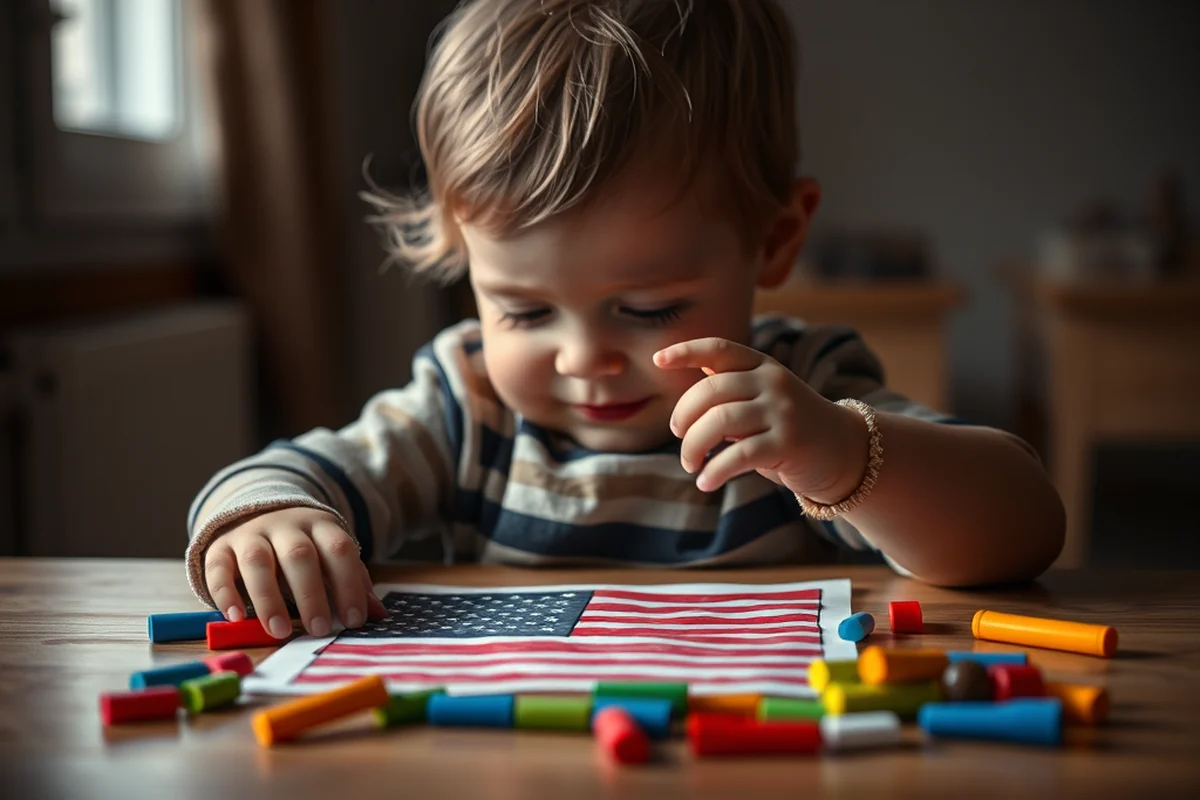
For this activity, you only need a few basic materials: paper, crayons or markers, and a printed image of the American flag for reference. I always choose paper that is thick enough to prevent the colors from bleeding through — this makes a big difference in the final result. I've found that using crayons works best for younger kids, while markers are more suitable for older children who can control their hand movements better.
I recommend using a variety of colors to help children recognize the different parts of the flag. It's important to make sure the colors are as close to the actual flag as possible, so red is red, white is white, and blue is blue. I've tested different brands of crayons and markers, and I find that Crayola's colors are the most accurate and vibrant for this activity.[4]
The cost is minimal — I've spent less than $10 on materials for this project. I reuse paper and markers from other art activities, which helps reduce the cost even further. I've never had a problem with materials, and my kids have always been excited to use the colors and create something that looks like the American flag.[5]
Simple materials create a powerful learning experience.
Related: Mess free paint set
Teaching Kids About the Flag's Symbolism
As you draw the flag, take the time to explain what each part represents. I always start by talking about the 13 stripes — they represent the 13 original colonies. I use a simple explanation, like 'These stripes are like the first 13 steps we took as a country.' This helps children understand the historical significance of the flag.
The 50 stars are a bit trickier to explain, but I find that using a visual aid helps. I show my kids a map of the United States and point out that each star represents a state. We count the stars together and talk about how the flag has changed over time as new states were added. This is a great way to spark their curiosity and encourage them to learn more about history.
I've noticed that my kids are more engaged when the activity is tied to something they can see and touch. When they draw the flag, they're not just coloring in lines — they're creating a symbol that represents something bigger than themselves. This makes the activity more meaningful and helps them connect with the subject matter on a deeper level.
Print a clear image of the American flag and use it as a reference to help children understand the layout and design.
“There's something magical about watching your child's hands move across paper, creating something that represents something bigger than themselves.”— Messysenses editors
Related: Mess free art projects
Making the Activity Fun and Interactive
I like to turn the American flag drawing into a game, which makes the activity more fun and interactive. For younger kids, we play a counting game where they have to count the stripes and stars as they draw them. For older kids, I challenge them to recreate the flag as accurately as possible, and we discuss the different parts of the flag as we go.
I also like to incorporate storytelling into the activity. I tell my kids a short story about how the flag was created and why it's important. I've found that this helps them remember the information better and makes the activity more meaningful. I also like to use a song or a rhyme to help them remember the number of stripes and stars.
Another way to make the activity more interactive is to let the kids take turns drawing different parts of the flag. I find that this helps them feel more involved and gives them a sense of accomplishment when they complete their part. I've seen this work well with both siblings and friends who are doing the activity together.
Related: Art mess setup cleanup for toddlers
Encouraging Creativity and Individuality
While it's important to teach children about the symbolism of the American flag, it's also important to allow them to express their own ideas and interpretations. I encourage my kids to add their own touches to the flag, like drawing animals or writing their names on it. This helps them feel more connected to the activity and makes the flag more personal.
I've found that when children are given the freedom to express themselves, they are more engaged and excited about the activity. I always remind them that the flag is a symbol of freedom and creativity, and that they can make it their own in any way they choose. This helps them feel more confident and proud of their work.
I also like to let my kids choose the colors they want to use. While I recommend using the traditional red, white, and blue, I find that allowing them to use other colors can be a fun way to explore creativity and personal expression. I've seen my kids use purple, green, and yellow in their flags, and it's been a great way to encourage them to think outside the box.
Related: Cheap art mess setup cleanup
Creating a Lasting Memory
I've found that the American flag drawing is more than just a craft — it's a memory that lasts a lifetime. I always take a picture of my kids' finished flags and keep them in a special place. I've seen my kids look back at these pictures years later and remember the fun times we had creating them. This is one of the reasons I love doing this activity with my kids.
I also like to frame the finished flags and hang them on the wall. This gives my kids a sense of pride and accomplishment, and it's a great way to display their work. I've seen my kids point out their flags to guests and talk about what they learned while creating them. This helps them feel more connected to the activity and the history behind the flag.
I believe that creating these kinds of memories is one of the most important things we can do as parents. The American flag drawing is a small but meaningful activity that can create a lasting memory that your child will cherish for years to come. It's a simple way to connect with your kids and teach them about history, creativity, and the importance of the flag.
These memories are worth more than any material possession.
Related: How to art mess setup cleanup
Making the Activity Accessible for All Ages
One of the best things about the American flag drawing is that it can be adapted to suit the abilities and interests of children of all ages. For younger kids, we focus on the basics — drawing the stripes and stars, and talking about the colors and symbols. For older kids, we go into more detail about the history and meaning of the flag.
I've found that this activity works well for kids as young as three and as old as ten. I've seen my youngest daughter use her fingers to press colors onto paper, while my oldest son has used fine-tip markers to create intricate details. This flexibility makes the activity accessible to a wide range种 of children and parents.
I always encourage parents to adapt the activity to their child's abilities and interests. Whether your child is interested in history, art, or just having fun, the American flag drawing can be made to fit their needs. This helps ensure that the activity is enjoyable and meaningful for every child.
🎨 Gentle Approach
A slow and patient version that focuses on storytelling and simple shapes, perfect for toddlers and young children.
🚀 Fast-Track Version
A quick and efficient method that uses pre-printed templates for older kids who want to get the job done faster.
🧳 Travel-Friendly Option
A portable version using small paper and compact art supplies, ideal for on-the-go families.
👨👩👧👦 Multiple Kids Version
A collaborative approach where each child draws a different part of the flag, making it a group activity.
🔄 Regression Reset
A way to revisit the activity with older kids who are ready to learn more about the flag's history and symbolism.
| The mistake | Why it happens | The fix |
|---|---|---|
| Not explaining the symbolism of the flag. | Without context, the activity can feel like just a drawing exercise and lose its educational value. | Always take time to explain the meaning behind the flag's design and colors before starting the activity. |
| Using the wrong colors for the flag. | Incorrect colors can confuse the meaning of the flag and make the activity less effective. | Use accurate colors — red, white, and blue — to ensure the flag looks authentic and is educational. |
| Forcing the child to complete the drawing quickly. | This can increase frustration and reduce the child's enjoyment of the activity. | Allow the child to work at their own pace and provide encouragement and support as they go. |
| Not adapting the activity to the child's age and abilities. | This can make the activity too difficult or too simple, reducing its effectiveness and engagement. |
American Flag Drawing
Common Questions
What age is best for the American flag drawing activity?
Do I need any special materials for this activity?
What if my child is not interested in the activity?
How long does the activity usually take?
References
- County Flag Challenge: Winning Entries | america250 - NC.gov (america250.nc.gov)
- Alumnus Kit Hinrichs' Love for the American Flag Runs Deep (artcenter.edu)
- Flag Day | The Art Institute of Chicago (artic.edu)
- Reflecting on American Identity at the Nation's 250th Anniversary (artmuseum.princeton.edu)
- Patriotic Symbols - San Bernardino - CSUSB (csusb.edu)
Cite this guide
Messysenses (2026). American Flag Drawing. https://messysenses.com/american-flag-drawing/
Feel free to cite or share this guide.