
Mud Kitchen Activity Ideas
📖 Table of Contents
I remember the first time my toddler turned a puddle into a 'mud kitchen' — it was just a patch of wet earth by the side of the road. She insisted it was a restaurant. I laughed, but as she used sticks as spoons and leaves as plates, I realized how powerful this simple activity was. A mud kitchen is more than just a mess; it's a gateway to creativity, problem-solving, and sensory exploration. Whether it's a rainy afternoon or a summer day with a hose, the mud kitchen can be a daily ritual that brings joy and learning into our lives.[1]
As a parent, I've learned that the mess is worth it. My daughter once spent an hour building a 'cake' out of mud and stones, only to 'sell' it to me in exchange for a sticker. That moment taught me that the mud kitchen isn't just about play — it's about connection. The squelch of wet soil under her feet, the squish of mud between her fingers, the way she 'cooked' with her imagination — all of these are experiences that can't be replicated by screens or structured lessons.
Since then, I've spent countless hours experimenting with different mud kitchen activity ideas, and I've learned what works and what doesn't. It's not about perfection; it's about engagement. The key is to let go of the need for order and embrace the chaos. A mud kitchen is a space where kids can be messy, creative, and proud of their work. It's also a chance for parents to step back and watch their children explore the world in their own way.
Why You'll Love This Activity
- Encourages unstructured, imaginative play and problem-solving.
- Fosters sensory development and fine motor skills through hands-on exploration.
- Strengthens parent-child bonds through shared, messy fun.
- Promotes environmental awareness and a love for nature.
Turning Puddles into Play Spaces
As of October 2026, a mud kitchen doesn't require a dedicated space — it can be a patch of wet soil, a garden bed, or even the side of a driveway. I've turned our backyard into a mud kitchen with just a hose, a few sticks, and some leftover flower pots. The key is to provide kids with tools like wooden spoons, plastic containers, or even old cups to mimic real kitchen items. The sound of splashing water, the texture of mud, and the way the ground changes under their feet make it an immersive experience.[2]
I once set up a mud kitchen in the front yard after a rainstorm, and my son spent an hour creating 'mud pies' and 'soup' using leaves as bowls. He even 'cooked' a meal for our neighbor’s dog. It was messy, but the joy in his eyes was undeniable. The beauty of a mud kitchen is that it's constantly evolving — each day brings new textures, new tools, and new stories.
You don’t need to buy anything special for a mud kitchen. A few items from around the house — like old plastic containers, spoons, or even empty bottles — can be used as utensils. I’ve even used pieces of driftwood as 'chopping boards' and plastic wrap as 'table cloths.' The possibilities are endless, and the only rule is to let the kids lead the way.
Look around your home for items that can double as kitchen tools — plastic containers, spoons, and even old cups can become part of the fun.
The Power of Messy Play

Research shows that messy play supports cognitive development by allowing children to explore, experiment, and make mistakes without fear. When my daughter was 2, she spent hours 'baking' in the mud, mixing in leaves and pebbles, and even using her hands as 'kneading tools.' It was messy, but it was also incredibly valuable. She was learning about textures, cause and effect, and even basic math as she counted how many pebbles she added to her 'cake.'[3]
I’ve noticed that the more time my child spends in the mud kitchen, the more confident she becomes in trying new things. She once tried to 'fry' a rock by placing it in the sun, and when it didn’t 'cook,' she laughed and tried again with a different object. This kind of experimentation is what builds resilience and curiosity. It’s also a chance for her to learn from failure — and she’s not afraid of it anymore.
The tactile experience of playing in mud helps develop fine motor skills, as children learn to grip, pinch, and manipulate objects. I’ve seen my daughter’s hand strength improve over time as she uses sticks to stir 'soup' and her fingers to mold 'dough.' It’s all happening naturally, without any structured lesson plan.
Messy play is messy, but it's also magic.
Related: Pottery barn for kids furniture
Encouraging Creativity and Imagination
When I set up a mud kitchen, I never dictate what the 'recipes' should be. Instead, I let my daughter come up with her own ideas. One day, she made a 'mud pizza' and 'cooked' it with a stick. Another day, she created a 'soup' that required 'three pebbles and two leaves.' These moments show how a simple activity can spark complex thinking and storytelling. It’s a way for children to express themselves without limitations.
I’ve noticed that when my daughter is in the mud kitchen, she often plays out scenarios from her day — like making 'lunch' for her doll or 'birthday cake' for her brother. It’s a form of pretend play that helps her process emotions and build empathy. I’ve also seen her create entire 'menus' and 'restaurants,' which she then 'sells' to other kids in the neighborhood. It’s a great way to practice communication and social skills.
The open-ended nature of a mud kitchen allows children to explore different roles, solve problems, and think creatively. It’s not about following instructions — it’s about discovery. I’ve watched my daughter transform a simple mud pit into a kingdom, a restaurant, and even a science lab, all within the same day. It’s amazing to see her imagination in action.
Avoid dictating what the 'recipes' should be — let your child take the lead and be the chef of their own kitchen.
“I remember the first time my toddler turned a puddle into a 'mud kitchen' — it was just a patch of wet earth by the…”— Messysenses editors
Related: Mud kitchen for kids
Sensory Development Through Mud Play
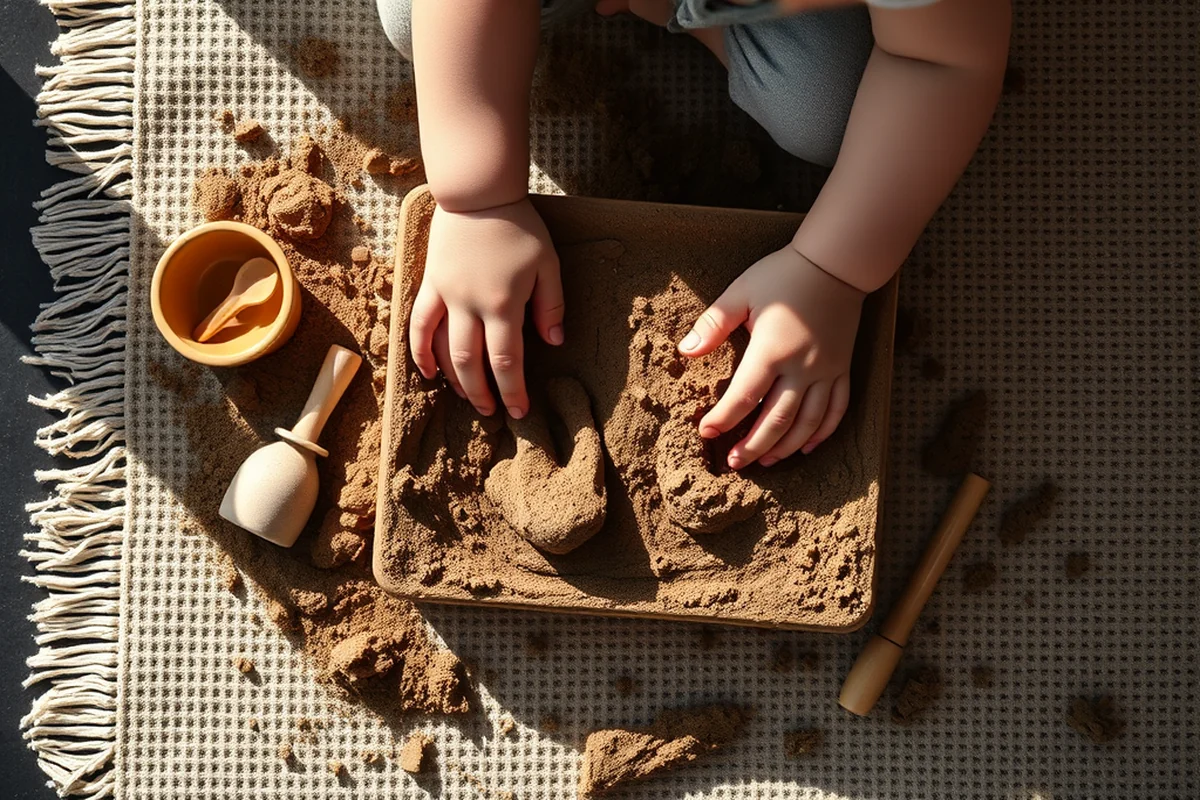
Sensory play is vital for young children, and the mud kitchen is one of the best ways to engage multiple senses at once. The texture of mud, the sound of splashing water, and the smell of the earth all work together to create a multi-sensory experience. I’ve noticed that my daughter is more aware of her surroundings after spending time in the mud kitchen — she can describe the feel of the mud, the way it squelches. Even the difference between wet and dry soil.
The act of digging, scooping, and mixing in the mud helps develop fine motor skills and hand-eye coordination. My daughter has improved her grip strength by using sticks to stir her 'soup' and her fingers to mold 'dough.' I’ve also seen her become more confident in using her hands. Has helped her in other areas, like tying her shoes or using a pencil.
The sensory experience of a mud kitchen can also help with emotional regulation. When my daughter gets frustrated during a 'cooking' session, she often sits in the mud and takes deep breaths, which helps her calm down. It’s a natural way for her to process her emotions and develop self-awareness.
Related: Outdoor mud kitchen for kids
Creating a Safe and Supportive Environment
Safety is important with mud kitchens. I always make sure the area is free from sharp objects, broken glass, or anything that could cause injury. I’ve also set up a 'clean-up zone' with a hose and a bucket so that my daughter can wash off before coming inside. It’s important to have a space where she feels comfortable to play without worrying about getting hurt.
I’ve learned that being involved in the mud kitchen experience is key. I often join my daughter in the 'cooking' — even if I’m just pretending to be the chef or the customer. It helps build a connection and shows her that I’m interested in what she’s doing. I’ve also made it a point to praise her creativity and effort, which has boosted her confidence and motivation to keep exploring.
It’s also important to be flexible with the rules. I’ve noticed that when I’m too strict about the mess, my daughter becomes less interested in the activity. Instead, I try to be more lenient and focus on the joy of the experience. It’s about having fun, not about perfection.
Related: Mud kitchen for kids outdoor
Connecting with Nature Through Play
One of the biggest benefits of a mud kitchen is that it brings children closer to nature. I’ve noticed that my daughter is more curious about the world around her now — she asks questions about insects, plants, and even the weather. She’s started to recognize different types of soil and even learned how to identify rocks by their texture.
We often use the mud kitchen as a way to teach my daughter about the environment. For example, we’ve talked about how rain helps plants grow and how the sun dries up the mud. She’s even started to take care of the garden in our backyard, planting seeds and watering the plants. It’s amazing to see her connection with nature grow over time.
The mud kitchen also encourages a sense of responsibility. My daughter has become more aware of how the environment works and has started to take small steps to protect it — like picking up trash or avoiding stepping on plants. It’s a natural way for her to learn about sustainability and care for the planet.
Mud kitchens bring kids closer to the earth — one messy day at a time.
Related: Pottery barn teens
Building Confidence and Independence
One of the best things about a mud kitchen is that it allows children to take the lead and make their own decisions. My daughter has become more confident in her choices, whether it’s deciding what to 'cook' or how to set up the 'kitchen.' I’ve noticed that she’s more willing to try new things and take on challenges without hesitation.
I’ve also seen her develop a sense of independence as she learns to clean up after herself and organize her 'kitchen' tools. It’s a small but important step in her growth. She’s started to take pride in her work and even asks for feedback on her creations. It’s incredible to watch her become more self-assured and capable.
The mud kitchen has also helped my daughter build resilience. When she makes a mistake or her 'recipe' doesn’t turn out the way she expected, she doesn’t get discouraged. Instead, she tries again — and that’s the kind of perseverance that will serve her well in life.
🌼 Gentle Mud Kitchen
Perfect for toddlers who are just beginning to explore messy play. Use soft tools and focus on sensory exploration.
⏱️ Fast-Track Mud Kitchen
Ideal for busy parents who want a quick, fun activity that still engages the senses. Use pre-made items and keep the setup simple.
🧳 Travel/away-from-home Mud Kitchen
Great for trips or days out of the house. Use natural items from parks or beaches to create a mini mud kitchen on the go.
👶 Multiples Mud Kitchen
Designed for families with multiple children. Encourages teamwork and sharing during the 'cooking' process.
🔄 Regression Reset Mud Kitchen
A great way to help children who are going through a developmental regression. Focus on sensory play and simple, repetitive activities.
| The mistake | Why it happens | The fix |
|---|---|---|
| Not providing enough tools or materials. | A lack of tools can make the activity feel incomplete or unstimulating for the child. | Provide a variety of tools — like spoons, bowls, sticks, and cups — to keep the activity engaging and fun. |
| Being too strict about the 'clean-up' process. | Being too strict can make the child feel like they’re being punished for playing, which can reduce their interest in the activity. | Make clean-up part of the fun. Use a hose, a bucket, and a sponge to create a 'washing station' that feels like a natural extension of the play. |
Mud Kitchen Activity Ideas
Common Questions
How long should a mud kitchen session last?
Can I do a mud kitchen activity indoors?
What if my child is afraid of getting dirty?
How can I encourage my child to clean up after playing in the mud kitchen?
References
- Comments Received on Draft 401 Water Quality Certification US ... (lf-public.deq.utah.gov)
- North Carolina Public Schools - NC DPI (dpi.nc.gov)
- Arizona's Infant and Toddler Developmental Guidelines (azed.gov)
Cite this guide
Messysenses (2026). Mud Kitchen Activity Ideas. https://messysenses.com/mud-kitchen-activity-ideas/
Feel free to cite or share this guide.