
Easy Playdough Recipe For Kids
📖 Table of Contents
- Why Homemade Playdough Matters for Early Childhood
- How to Make Playdough at Home: A Simple Process
- The Benefits of Playdough for Development
- Making Playdough More Interesting: Tips for Long-Lasting Fun
- Playdough as a Tool for Learning and Exploration
- Playdough and the Importance of Play in Early Childhood
- How to Store and Reuse Playdough for Maximum Value
- Make It Your Way
- Frequently Asked Questions
I remember the first time my son held a piece of playdough in his tiny hands. He was just two, and his eyes lit up as he squished it between his fingers, giggling at the way it stretched and bounced back. That moment, simple and messy, made me realize how powerful something as basic as playdough could be for a child’s development. Finding an easy playdough recipe for kids wasn’t just about saving money—it was about creating something that could bring joy, creativity, and learning into our home.
For years, I relied on store-bought playdough, but it always seemed to disappear as quickly as it appeared. Plus, the price kept rising, and I didn’t like the idea of my child being exposed to unnecessary chemicals. When I discovered a way to make our own playdough at home, it felt like a revelation. The process was simple, and the results were even better. My kids loved playing with it for hours, and I felt good knowing exactly what was in it.
This easy playdough recipe for kids has become a staple in our household. It’s not just about the fun of playing; it’s about the way it helps my children build fine motor skills, explore textures, and even practice colors and shapes. The best part is that making it doesn’t take much time or effort. I’ve tested it with my kids multiple times, and it’s always been a hit. It’s a small but impactful way to bring creativity and learning into our home every day.[1]
Why You'll Love This Easy Playdough Recipe for Kids
- Cost-effective and safe, made with ingredients you likely already have at home.
- Encourages sensory play, fine motor development, and creativity.
- No chemical additives, so it's safer for little hands and mouths.
- Easy to store and reuse, reducing waste and making cleanup simple.
Why Homemade Playdough Matters for Early Childhood
As of September 2026, I remember the first time my son tried to eat his playdough. It was a minor disaster, but it made me think about how important it is to have non-toxic, safe materials for young children. Store-bought playdough sometimes contains ingredients that aren’t great for little mouths, and I wanted something I could feel good about. Making our own playdough at home gives me that peace of mind. It’s also a way to involve my kids in the process, even if just for a few minutes, and it’s a bonding experience that adds value to the activity.
Beyond the safety aspect, homemade playdough is a sensory powerhouse. The texture is different from store-bought versions, and it feels more natural in the hands. My daughter loves the way it squishes and stretches, and she often says it feels like ‘magic’ to her. It helps her explore the world through touch, which is an essential part of early development. I’ve seen her fine motor skills improve over the months we’ve been using it regularly.
One of the best parts of making our own playdough is that it’s an open-ended activity. There’s no set way to use it—my kids have used it for sculpting, painting, sorting, and even pretending to bake cookies. The possibilities are endless, and that’s what makes it so valuable for their imagination and creativity.
After a few uses, the playdough may become too dry or sticky. Add a drop of water or a tiny bit of oil to restore it. This helps keep the texture just right for your child’s enjoyment.
How to Make Playdough at Home: A Simple Process

The first time I made playdough at home, I was amazed at how straightforward it was. I had all the ingredients on hand, and it took less than ten minutes to mix it up. It felt like a small victory, and it made me realize how much more I could do at home without relying on store-bought products. My kids were thrilled, and the best part was that I could watch them have fun without worrying about what was in the materials.
The key to making playdough at home is to use ingredients that are safe and familiar. I’ve used flour, salt, oil, and water in my recipe, which are all things I can find in my kitchen. It’s also important to make sure the mixture is just right—not too dry or too wet. I’ve learned through trial and error that a little extra flour or a drop of oil can make a big difference in the final texture.
Since I started making playdough at home, I’ve noticed that my kids are more engaged with the activity. It’s not just about the play—it’s about the process of making something together. Even though I’m not a chef or a scientist, I’ve found that creating things with my kids is one of the most rewarding parts of parenting.
Making playdough at home is a small but meaningful way to spend quality time with your kids.
Related: Child playing with playdough
Related: Simple playdough recipe for kids
Related: Clay dough for kids
Related: Easy toddler playdough clay
Related: Playdough creative play ideas
The Benefits of Playdough for Development
I’ve noticed that my son’s grip has gotten stronger since we started using playdough regularly. He used to struggle with holding small objects, but now he can manipulate the playdough with ease. It’s amazing how something as simple as squishing and rolling the dough can help build muscle strength and coordination. I’ve also seen improvements in his problem-solving skills as he tries to shape the dough into different forms and figures.
Playdough is also a great tool for encouraging creativity and imagination. My daughter loves pretending the dough is clay and making little sculptures of animals and people. It gives her a way to express herself and explore different ideas. I’ve found that when she’s using playdough, she’s more focused and engaged, which is a huge plus.
In addition to motor and creative development, playdough also helps with color recognition and shape identification. I often mix in food coloring to make the playdough more vibrant, and it’s been a fun way for my kids to learn about colors and patterns. It’s not just a toy—it’s a learning tool that’s been seamlessly integrated into our daily routine.
Mix in a few drops of food coloring to create different colored playdoughs. This not only makes the playdough more visually engaging, but it also helps kids learn about colors and mixing shades.
“I remember the first time my son held a piece of playdough in his tiny hands.”— Messysenses editors
Making Playdough More Interesting: Tips for Long-Lasting Fun
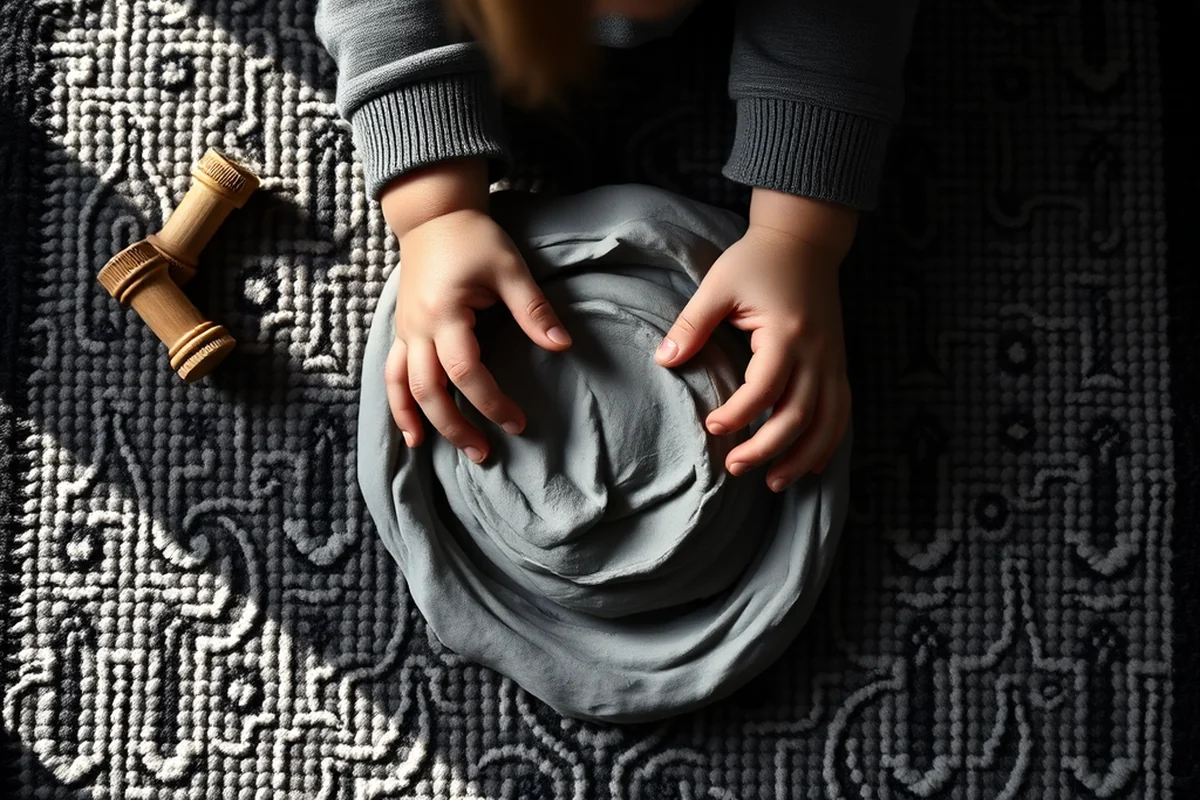
One of the things I’ve noticed is that the playdough doesn’t last forever—it starts to dry out after a few days. To keep it fresh, I’ve started storing it in airtight containers with a small piece of plastic wrap on top. It keeps the moisture in and prevents the dough from hardening. It also helps reduce the mess, which is a huge plus for busy parents.
I’ve also tried adding a few drops of essential oils, like lavender or peppermint, to give the playdough a nice scent. My kids love the way it smells, and it adds another sensory element to the play. I’ve found that the scent is subtle enough not to be overwhelming, but it makes the experience more enjoyable for them.
Another trick I’ve used is to make multiple batches in different colors and store them separately. That way, we can have a variety of textures and colors on hand for different activities. It also makes cleanup easier, as each color can be stored and reused without mixing them up.
Playdough as a Tool for Learning and Exploration
I’ve found that playdough can be a great way to introduce new concepts to my kids. For example, I’ve used it to teach them about shapes by asking them to create different forms and name them. It’s also been a way to practice counting and sorting by having them count how many pieces of dough they can roll out or sort by color. These are all small but valuable learning moments.
Another way I use playdough is to encourage storytelling. My daughter loves pretending the dough is clay and making little sculptures that she then tells stories about. It helps her develop language skills and imagination. I’ve also used it as a way to explore emotions, as she often uses the dough to create different faces and expressions.
I’ve also used playdough to help with social skills by having my kids share and take turns with the dough. It’s a way to teach them about cooperation and communication, which are important skills to develop early on. It’s amazing how much learning can happen through play.
Playdough and the Importance of Play in Early Childhood
I’ve always believed that play is the foundation of learning, and playdough is a perfect example of how simple activities can have a big impact. It’s not just about having fun—it’s about engaging with the world in a meaningful way. I’ve seen my kids develop new skills and explore their creativity through playdough, and it’s been a joy to watch.
Playdough also helps kids express their emotions and process their feelings in a safe and non-verbal way. I’ve noticed that when my daughter is feeling frustrated or upset, she often turns to playdough as a way to work through her emotions. It gives her a sense of control and comfort, which is incredibly valuable for her development.
The beauty of playdough is that it’s adaptable. Whether it’s used for fine motor practice, creative expression, or emotional exploration, it’s a versatile tool that supports a wide range年 of developmental needs. It’s a small but powerful way to make learning and growth a part of everyday life.
Play is the foundation of learning, and playdough is a perfect example of how simple activities can have a big impact.
How to Store and Reuse Playdough for Maximum Value
I’ve learned the hard way that playdough doesn’t last forever if it’s not stored properly. I’ve tried storing it in open containers before, and it would dry out quickly. Now, I use airtight containers with a piece of plastic wrap on top to keep the moisture in and the dust out. It’s a simple solution that makes a big difference in how long the playdough stays usable.
Another tip I’ve picked up is to store the playdough in separate containers if I’ve made multiple batches in different colors. This helps keep them from mixing together and makes it easier to find the right one when I need it. I’ve also started labeling the containers with the date I made them, so I can keep track of how long they’ve been stored.
I’ve also found that reusing playdough is a great way to reduce waste and save money. Instead of throwing it away, I can simply mix it up again and use it for another activity. It’s a small but impactful way to be more sustainable while still enjoying the benefits of playdough with my kids.
👶 Gentle Version for Sensitive Skin
This version uses natural, non-irritating ingredients for kids with sensitive skin or allergies.
⚡ Fast-Track No-Mix Option
A quicker method that skips some steps, perfect for busy days when you just want to get started fast.
🧳 Travel-Friendly Playdough
A portable and mess-free version that’s easy to take on the go and clean up afterward.
👯♀️ Multiple-Child Playdough
A version that allows multiple kids to play at the same time without fighting over the same piece.
🔄 Regression Reset Playdough
A special mix designed to help kids who are experiencing developmental regression or sensory issues.
| The mistake | Why it happens | The fix |
|---|---|---|
| Not sealing the container properly | Leaving the container open can cause the playdough to dry out quickly and lose its texture. | Always use an airtight container with a small piece of plastic wrap on top to keep the moisture in. |
| Using the wrong type of oil | Using an oil that’s not food-safe or has a strong scent can be harmful or unpleasant for children. | Stick to using a small amount of food-grade oil like vegetable oil or coconut oil for the best results. |
Easy Playdough Recipe For Kids
Common Questions
How long does homemade playdough last?
Can I use flour instead of cornstarch?
Is playdough safe for babies?
Can I make playdough without salt?
References
- Playdough Power - NAEYC (naeyc.org)
Cite this guide
Messysenses (2026). Easy Playdough Recipe For Kids. https://messysenses.com/easy-playdough-recipe-for-kids/
Feel free to cite or share this guide.