
Outdoor Mud Kitchen For Toddlers
📖 Table of Contents
- What Is an Outdoor Mud Kitchen for Toddlers?
- The Benefits of an Outdoor Mud Kitchen for Toddlers
- How to Set Up an Outdoor Mud Kitchen for Toddlers
- Safety Tips for an Outdoor Mud Kitchen for Toddlers
- Encouraging Creativity in an Outdoor Mud Kitchen for Toddlers
- The Social Benefits of an Outdoor Mud Kitchen for Toddlers
- Tips for Keeping an Outdoor Mud Kitchen for Toddlers Clean and Organized
- Make It Your Way
- Frequently Asked Questions
The first time my daughter dug her hands into the mud, I was both horrified and fascinated. It was a sunny afternoon at the park. As she scooped wet dirt into a makeshift bowl, I realized this wasn’t just play — it was learning, creativity, and sensory exploration all at once. An outdoor mud kitchen for toddlers isn’t just a whimsical idea; it’s a powerful tool that taps into the natural curiosity of young children. I’ve seen the way they transform simple mud and sticks into elaborate meals, and it’s been one of the most rewarding parts of parenting.
When I first set up a small mud kitchen in our backyard, I was surprised by how quickly my toddler took to it. What started as a simple pile of dirt and a few bowls quickly evolved into a full-blown culinary adventure. Watching her mix mud with leaves and 'cook' for her imaginary friends filled me with joy — it wasn’t just play, it was a way for her to express herself and explore the world around her. An outdoor mud kitchen for toddlers isn’t just a way to keep them entertained; it’s a way to foster creativity, independence, and a deep connection with nature.
Over the past few months, I’ve experimented with different setups for our outdoor mud kitchen for toddlers, and I’ve learned a lot in the process. From the materials that last the longest to the ways my daughter interacts with the space, every detail matters. Whether you’re a first-time parent or someone who’s been there for years, creating an outdoor mud kitchen can be a transformative experience — for your child, and for you.
Why You'll Love This Outdoor Mud Kitchen for Toddlers
- Encourages unstructured, imaginative play that fosters creativity and problem-solving.
- Provides a sensory-rich environment that supports early development and motor skills.
- Helps children build confidence through hands-on exploration and independence.
- Offers a safe, natural alternative to screen-based play and indoor messes.
What Is an Outdoor Mud Kitchen for Toddlers?
As of October 2026, an outdoor mud kitchen for toddlers is more than just a pile of mud and a few bowls — it’s a creative space that lets children explore the world around them in a hands-on way. I set up mine using a few old buckets, a wooden table, and some natural materials I found in our backyard. The concept is straightforward, but the impact it had on my daughter was profound. She treated the space like a real kitchen, complete with 'cooking' and 'serving' to her dolls and stuffed animals.
Creating a mud kitchen is about giving children the freedom to explore and create. There’s no right or wrong way to play — just pure imagination. I’ve watched my daughter mix mud with sticks and leaves, pretending to make soup and cake, and I’ve never seen her so engaged. The act of digging, scooping, and mixing helps develop fine motor skills and hand-eye coordination in a way that’s both fun and educational.[1]
It’s not just about the mess — it’s about the learning. The tactile experience of getting their hands dirty is crucial for a toddler’s development. I noticed that after a few weeks of using the mud kitchen, my daughter was more confident in her play and showed more interest in trying new things. It’s a space that encourages experimentation and creativity, and that’s something I value deeply as a parent.
Use items you already have at home, like buckets, bowls, and wooden spoons. Collect sticks, leaves, and stones from your yard or local park to add variety and texture.
The Benefits of an Outdoor Mud Kitchen for Toddlers
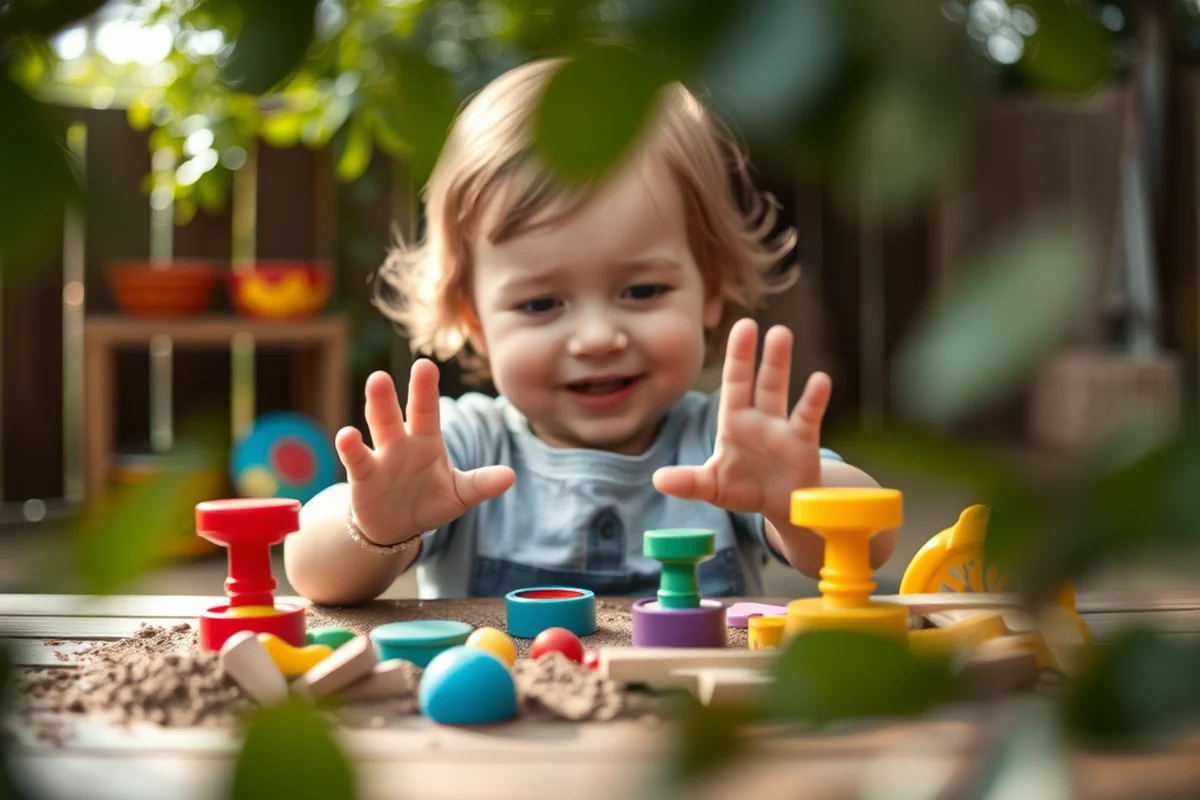
One of the best things about an outdoor mud kitchen for toddlers is the way it supports their overall development. I’ve noticed that my daughter has improved her fine motor skills — she’s better at grasping objects and using tools like small spoons and tongs. The act of digging and scooping helps strengthen her hands and fingers, which is crucial at this stage.
Beyond motor skills, the mud kitchen also enhances her cognitive development. She’s learning how to plan, create, and even solve problems — like figuring out how to make a ‘cake’ when she runs out of mud. The more time she spends playing, the more she experiments and learns. It’s amazing to see how her creativity and imagination flourish in this environment.
And let’s not forget the social benefits. When I invited my neighbor’s toddler to play with us, the two of them quickly became a team, sharing ‘ingredients’ and working together on ‘dishes.’ It was heartwarming to see them collaborate. It reminded me of the importance of unstructured play for building relationships.
Play is the work of childhood — and in the mud, it’s the most meaningful kind.
Related: Mud kitchen clip art
How to Set Up an Outdoor Mud Kitchen for Toddlers
Setting up an outdoor mud kitchen for toddlers doesn’t require a lot of time or money. I used two large buckets, a small wooden table, and a few old kitchen utensils — things I had lying around the house. I also collected some sticks, leaves, and stones from our backyard to add texture and variety. The key is to create a space that feels inviting and safe for your child to explore.
When I first set it up, I made sure to put it in a spot that was easy to access and not too far from the house. I also used a piece of old fabric to cover the table when it wasn’t in use, which made cleanup a breeze. My daughter loved the way the table looked, and she would often sit there for hours, pretending to cook and serve her imaginary friends.
I also made sure to keep a small watering can nearby, which I filled with water from the hose. This helped keep the mud from drying out too quickly, and it also gave my daughter a way to play with water, which she absolutely loved. It was a simple addition that made the whole experience even more engaging.
A small watering can helps keep the mud soft and easy to work with, and it adds another layer of sensory play with water.
“The first time my daughter dug her hands into the mud, I was both horrified and fascinated.”— Messysenses editors
Related: Outdoor mud kitchen plans
Safety Tips for an Outdoor Mud Kitchen for Toddlers
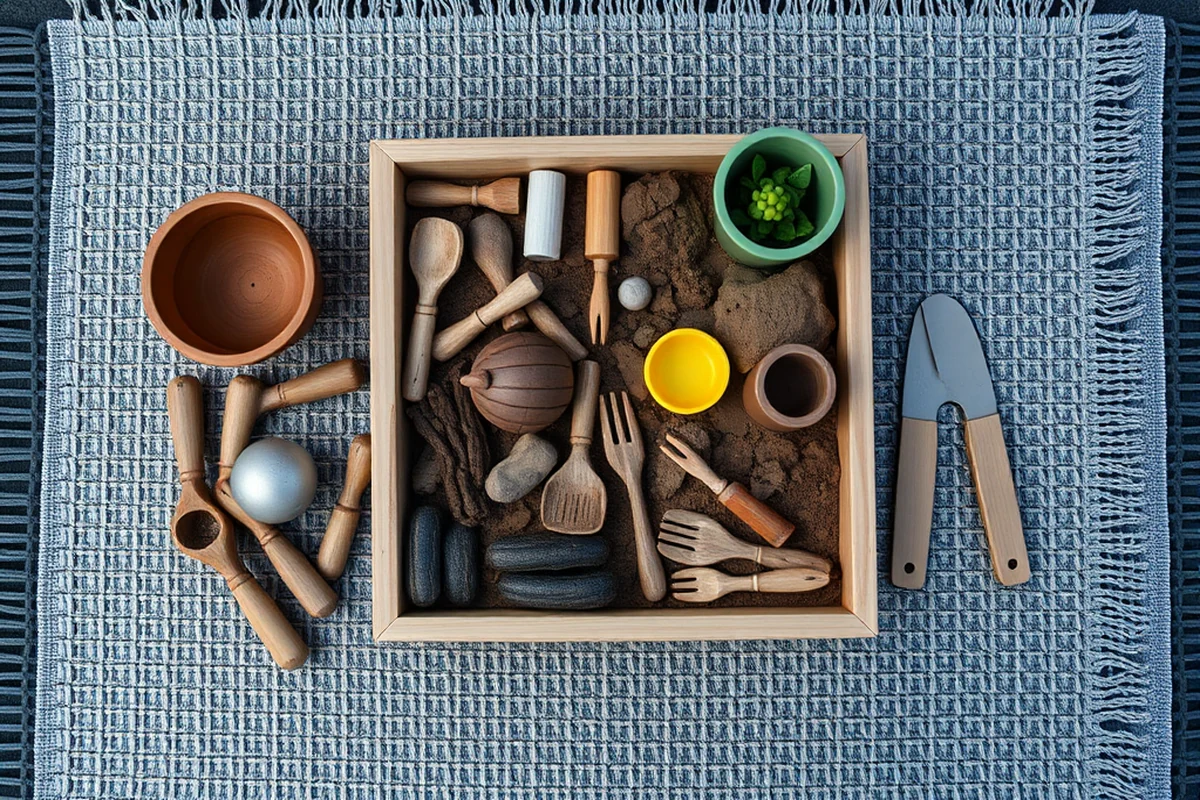
Safety is always a top priority when setting up an outdoor mud kitchen for toddlers. I made sure to choose a location that was away from busy areas and had a soft surface, like grass or mulch, to prevent injuries. I also checked all the materials to make sure they were clean and free from sharp edges or small parts that could be a choking hazard.
I kept the area clear of any harmful plants or chemicals, and I made sure to avoid using any synthetic materials that could be toxic if ingested. Natural elements like mud, leaves, and stones are the safest and most effective choices. I also made sure to clean the bowls and utensils after each use, which helped keep everything hygienic.
I also made sure to supervise my daughter while she was playing, just to be safe. I was amazed at how much independence she had — she could mix and scoop on her own, but I was always nearby if she needed help. It was a great way to balance her freedom with my peace of mind.
Related: Making a mud kitchen
Encouraging Creativity in an Outdoor Mud Kitchen for Toddlers
An outdoor mud kitchen for toddlers is a powerful tool for fostering creativity and imagination. I’ve watched my daughter transform mud into everything from soup to cake, and I’ve never seen her so engaged. She loves pretending to cook for her dolls and stuffed animals, and it’s been a great way for her to express herself and explore her interests.
The beauty of an outdoor mud kitchen is that there are no rules — just pure imagination. I’ve seen her use sticks as spoons, leaves as ingredients. Even stones as ‘spices.’ It’s amazing to see how she thinks outside the box and comes up with new ideas every time she plays.
I also encourage her to make up stories while she plays — like pretending she’s a chef running a restaurant or a farmer growing vegetables in the mud. It’s a great way for her to develop her language skills and build her confidence as she shares her ideas with others.
Related: Monster truck coloring pages
The Social Benefits of an Outdoor Mud Kitchen for Toddlers
One of the most unexpected benefits of an outdoor mud kitchen for toddlers is the way it helps build social skills. I’ve seen my daughter and her friends work together to ‘cook’ meals and share ingredients, and it’s been a wonderful experience for everyone involved. It’s amazing to see how quickly children learn to collaborate and communicate when they’re playing together.
I’ve also noticed that the mud kitchen helps children develop empathy and understanding. When my daughter was trying to share a bowl of mud with another child, I saw how she was learning to be patient and kind. It was a small moment, but it meant a lot to me as a parent.
I’ve also seen how the mud kitchen helps children learn to take turns and respect each other’s space. It’s a simple activity, but it has a big impact on their social development. It’s a great way for them to build friendships and learn important life skills in a fun and natural environment.
In the mud, friendships are built — one hand full of dirt at a time.
Related: Outdoor wooden mud kitchen
Tips for Keeping an Outdoor Mud Kitchen for Toddlers Clean and Organized
Keeping an outdoor mud kitchen for toddlers clean and organized is one of the most important parts of maintaining the space. I’ve learned that a few simple tips can make a big difference. First, I always make sure to store the bowls and utensils in a dry place after each use — either in a bucket or a small storage box. This helps keep them clean and ready for the next play session.
I also use a small piece of fabric to cover the table when it’s not in use, which helps protect it from the weather and makes cleanup easier. I’ve noticed that this has helped keep the table in good condition for months, and it’s been a great investment.
Another tip I’ve found helpful is to have a small bucket of clean water and a few rags nearby. This allows my daughter to wipe down the table and clean up any messes as she goes. It’s a simple solution that keeps the space tidy and makes the whole experience more enjoyable for everyone involved.
🌱 Gentle Start
Begin with small quantities of mud and simple tools, focusing on sensory exploration and gentle play.
⚡ Fast-Track Setup
Use pre-made kits or quick assembly tools to set up an outdoor mud kitchen for toddlers in under an hour.
🧳 Travel/away-from-home
Create a portable version using lightweight containers and materials that are easy to transport and store.
👯♀️ Multiples
Set up multiple stations for several toddlers to play together, promoting teamwork and shared creativity.
🔄 Regression Reset
Use the mud kitchen as a way to help toddlers with developmental setbacks explore and re-engage with play and social interaction.
| The mistake | Why it happens | The fix |
|---|---|---|
| Choosing a location with hard ground | Hard ground can increase the risk of injury from falls, and it’s less comfortable for toddlers to sit or play on. | Choose a location with soft ground, like grass or mulch, to create a safer and more comfortable play area. |
| Using synthetic or toxic materials | Synthetic or toxic materials can be harmful if ingested and may not be safe for toddlers. | Use only natural, non-toxic materials like mud, leaves, and stones, and ensure all utensils are clean and safe for children. |
| Neglecting cleanup | Neglecting to clean the area after use can lead to the buildup of dirt, mold, or harmful bacteria. | Make sure to clean the area and all materials after each use to keep the space safe and hygienic. |
Outdoor Mud Kitchen For Toddlers
Common Questions
What age is best for an outdoor mud kitchen for toddlers?
What materials are safest for an outdoor mud kitchen for toddlers?
How often should I clean the outdoor mud kitchen for toddlers?
Can I set up an outdoor mud kitchen for toddlers in my backyard?
References
- South Carolina Early Learning Standards (ed.sc.gov)
Cite this guide
Messysenses (2026). Outdoor Mud Kitchen For Toddlers. https://messysenses.com/outdoor-mud-kitchen-for-toddlers/
Feel free to cite or share this guide.