
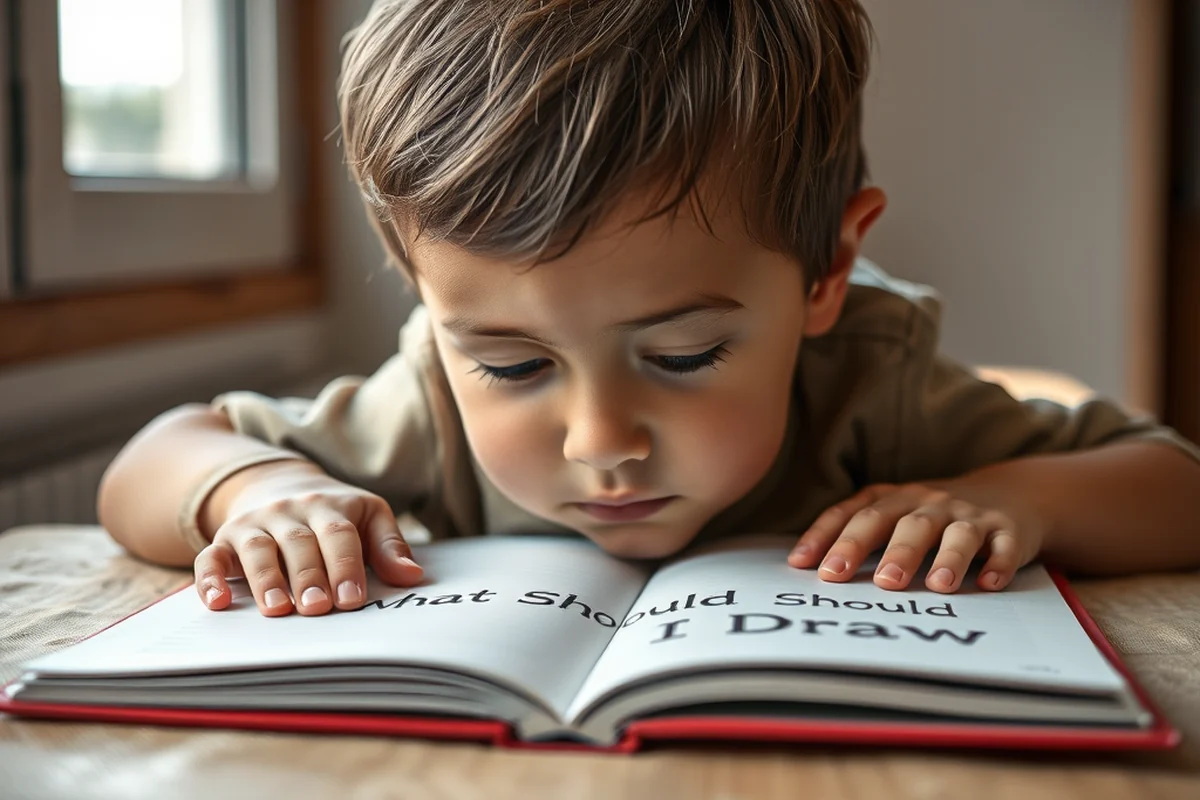
What Should I Draw
📖 Table of Contents
When my son was three, he asked me, 'What should I draw?' and stared at me with that mix of hope and confusion that only a child can manage. I didn’t know where to start — the blank paper felt like a mountain, and the possibilities were endless. That moment taught me something important: drawing for kids isn’t about perfection or even about the final product. It’s about the act of creation itself, the way their little fingers smudge the lines, and the joy that fills the room as they tell me what their picture means.[1]
Over the years, I’ve watched my kids and others go through phases where drawing becomes a lifeline. Whether it’s a toddler who uses crayons to process a day at daycare, a preschooler who wants to draw her family every single night, or a child who feels overwhelmed by emotions and turns to paper to express it, the question 'What should I draw?' is a gateway to deeper understanding. It’s not about the right answer, but about the right space — a space where creativity is welcomed, mess is accepted, and expression is encouraged.[2]
As a parent, I’ve learned that the answer to 'What should I draw?' is often not in the instruction, but in the invitation. It’s about offering a variety of materials, creating a safe environment, and allowing the child to lead the way. This article is for you — the parent who’s ever looked at a blank canvas with a child and wondered, 'What should I draw?' — and for the child who just wants to make something, anything, that feels like theirs.[3]
Why You'll Love This Approach to Drawing
- Encourages self-expression without pressure or expectation
- Builds confidence through the freedom to make mistakes
- Creates a lasting bond through shared creative time
- Supports emotional development through visual storytelling
The Power of Blank Paper
As of September 2026, I once gave my daughter a blank sheet of paper and told her to draw anything she wanted. She stared for a few minutes, then said, 'I don’t know what to draw.' The silence was heavy. It wasn’t about the paper — it was about the pressure she felt to make something perfect. That day, I realized that the blank page can be a barrier, not an invitation.[4]
To help, I started keeping a few 'idea boxes' on the table. They had things like 'draw your favorite animal,' 'draw a place you’ve visited,' or 'draw your feelings today.' It gave her direction without forcing her to choose. The key is to keep the options open and the pressure low. You don’t have to know what they’ll draw — you just have to be there for the process.
One night, she drew a purple dinosaur with wings. I asked her what it was. She said, 'It’s a monster that lives in my closet and only comes out when I’m happy.' That kind of imagination is exactly what we want. It shows that creativity is limitless when the child feels free to explore.
Keep a small notebook with prompts, like 'Draw the best day of your life' or 'Draw your favorite book character.' Let your child flip through it and choose what they feel like drawing that day.
Drawing as a Tool for Communication
During a tough time, my son started drawing a lot more — but not the usual happy scenes. He was drawing angry monsters, broken hearts, and sad skies. At first, I didn’t know what to do. Then I started asking him about the drawings, and he began to tell me what was happening at school or what he was feeling at home.
One drawing had a boy crying in the corner with a red X over his head. I asked him about it. He said, 'That’s me when the big kids laugh at me.' It was a moment that made me realize how much drawing can reveal about a child’s inner world. It’s not just about the art — it’s about the story behind it.
I started keeping a 'drawing wall' in our home where we could hang some of his work. He loved seeing his drawings on the wall, and it gave him a sense of pride. It also helped me understand him better. Drawing is a language, and sometimes it’s the only one they can speak.
Drawing is a language, and sometimes it’s the only one they can speak.
Related: Mess free art projects
Choosing the Right Materials
I’ve tried so many different materials over the years — crayons, markers, colored pencils, even watercolors. Each has its own charm, but it’s important to know what works best for your child. I found that crayons are great for little hands, markers for bold lines, and watercolors for a more artistic feel.
I once bought a set of 'artistic' markers that were supposed to be child-safe, but they bled through the paper and were hard to clean. It was a big learning moment. Now I focus on quality over quantity, and I always make sure the materials are safe and easy to handle.
I keep a small bin with a few different drawing tools — crayons, markers, and a small brush set — and let my kids choose what they want. It’s not about the cost — it’s about the experience. A few good tools go a long way with creative play.
Change the drawing tools every few months to keep things fresh. Try seasonal items like leaf prints in autumn or snowflake drawings in winter. It keeps the activity exciting and gives you new prompts to use.
“When my son was three, he asked me, 'What should I draw?' and stared at me with that mix of hope and confusion that only…”— Messysenses editors
Related: Art mess setup cleanup for toddlers
Setting the Right Environment

I used to think that a dedicated art table or corner was necessary, but I’ve learned that it’s not always about the space — it’s about the feeling. My kids are just as happy drawing on the kitchen counter or the floor as they are on a special table.
One day, I noticed that my daughter preferred to draw in the hallway because it was quiet and she felt less watched. It was a small adjustment, but it made a big difference in her comfort and creativity. The environment should be safe, but not restrictive.
I’ve also learned that having a small 'drawing kit' with paper, markers, and a few other tools is helpful. It’s easy to carry around, and it makes it simple for the child to find everything they need. It’s not about perfection — it’s about making it easy to start.
Related: Cheap art mess setup cleanup
The Role of Parental Involvement
I used to think that my job was to give them prompts, like 'Draw a tree' or 'Draw your family.' But over time, I realized that it’s not about the prompts — it’s about the presence. My kids have drawn some of their most meaningful pieces when I was sitting with them, not telling them what to do, but just watching.
I remember one evening when I was working on the computer and my daughter was drawing in the corner. I didn’t say a word, but I watched as she drew a house with a very happy sun and a sad cloud. When I asked her about it, she said, 'The sun is happy because I’m here. The cloud is sad because I wish I could be with my friend.' That kind of depth is only possible when the parent is present and willing to listen.
I’ve learned that being a quiet presence is just as important as being an active participant. It’s not about fixing their drawings — it’s about supporting their creativity and allowing them to explore their own ideas.
Related: How to art mess setup cleanup
Encouraging Creativity Without Pressure
I used to be really hard on my kids’ drawings — I’d tell them their lines were too wobbly or their colors were too messy. But I realized that was stifling their creativity. Now, I focus on the joy of the process, not the perfection of the product.
One day, my son drew a rainbow that looked more like a zigzag. Instead of pointing out the mistake, I said, 'I love your rainbow — it looks like it’s dancing!' He beamed and started drawing more. That was the moment I realized that praise for effort, not perfection, is what helps creativity grow.
I’ve also learned that it’s okay for a drawing to be messy or incomplete. It’s not about the final product — it’s about the journey. I’ve seen so many parents try to 'fix' their child’s art, but the truth is, the child is the one who should be in control.
It’s not about the final product — it’s about the journey.
Related: Mess free toddler art
Drawing as a Bonding Activity
I remember one evening when I sat down with my daughter and said, 'Let’s draw something together.' She was hesitant at first. Soon we were both drawing on the same paper — her with bright colors and me with soft lines. It was a simple activity, but it created a moment of connection that I’ll never forget.
We’ve done many things together — read books, played games, and even cooked — but drawing is one of the few things that feels like a real partnership. It’s not about the art — it’s about the time we’re spending together. It’s about listening, learning, and creating.
I’ve also learned that drawing can be a great way to talk through difficult emotions. When my son was going through a tough time at school, we sat down and drew our feelings. It was a way for us to be open and honest without words. It created a space where we could both feel seen and heard.
🎨 Gentle Approach
Create a calm, supportive environment where your child feels safe to explore their creativity without pressure or expectation.
⏱️ Fast-Track Approach
Use simple prompts and materials to help your child quickly start drawing and express themselves in a short amount of time.
🧳 Travel Approach
Keep a small drawing kit with you for travel — it’s a great way to keep your child entertained and creative on the go.
👶 Multiples Approach
Use drawing as a shared activity for multiple children — it can be a great way to bond and create together.
🔄 Regression Reset Approach
Use drawing as a way to help your child process big emotions or changes — it can be a powerful tool for emotional reset.
| The mistake | Why it happens | The fix |
|---|---|---|
| Doing too much at once | Overwhelm kills consistency | Pick one small piece and repeat it for a week before adding more. |
| Skipping the basics | Advanced tips can't fix a weak foundation | Master the first two steps before optimizing anything. |
What Should I Draw
Common Questions
How can I help my child if they don’t know what to draw?
What if my child draws something that doesn’t make sense to me?
How can I encourage my child to keep drawing regularly?
What if my child is too focused on perfection?
References
- 3 Reasons You Should Learn to Draw - ISU CEWT Blog (blog.cetrain.isu.edu)
- Why should kids learn drawing? Find out the reasons! – Dennis Piper (blogs.oregonstate.edu)
- Standard Specifications and Standard Drawings - UDOT - Utah.gov (connect.udot.utah.gov)
- What Visual and Graphic Artists Should Know about Copyright (copyright.gov)
Cite this guide
Messysenses (2026). What Should I Draw. https://messysenses.com/what-should-i-draw/
Feel free to cite or share this guide.