
Mud Kitchen & Outdoor Art Tips
📖 Table of Contents
- Why Mud Kitchens Are a Game-Changer for Kids
- How to Make Outdoor Art Feel Like Magic (Without Any Tools)
- The Surprising Benefits of Messy Play for Development
- Making the Most of a Limited Space for Mud Play
- How to Keep Kids Safe While Having Fun with Mud and Art
- How to Encourage Creativity in Outdoor Art and Play
- Why Outdoor Play Is Better Than Screen Time for Kids
- Make It Your Way
- Frequently Asked Questions
I remember the day my son grabbed a handful of mud and started sculpting what looked like a giant, grumpy-faced frog in our backyard. It was messy, loud, and utterly magical. That moment sparked the idea for this article — a guide to turning outdoor play into a sensory-rich, creative adventure with mud kitchens and open-ended art activities. These aren't just games; they're opportunities to nurture confidence, creativity, and a deep connection to the natural world.
As a parent, I’ve learned that the most valuable lessons often come from the messiest moments. Whether it's squishing together dirt and water to make a 'cake' or painting with leaves and sticks, these activities are more than just fun. They're developmentally rich, offering kids the chance to explore textures, colors. Even basic science like mixing and separating materials — all while getting their hands and faces covered in the stuff they love most: mud.
The key to making these activities work? Keep it simple, flexible, and rooted in the joy of the moment. In this article, I’ll share my favorite tips, tricks, and real-life stories to help you turn your backyard or local park into a canvas for creativity, learning, and pure, unfiltered childhood magic.[1]
Why You'll Love This Approach to Mud Kitchens & Outdoor Art
- Encourages sensory exploration and creativity without the need for screens or structured lessons.
- Builds confidence and problem-solving skills as kids experiment and take ownership of their projects.
- Strengthens the parent-child bond through shared, messy fun and open-ended play.
- Promotes physical activity and a deeper connection to the natural environment.
Why Mud Kitchens Are a Game-Changer for Kids
As of October 2026, Mud kitchens are more than just a pile of dirt and a bucket — they’re a sensory-rich environment where kids can explore, create, and experiment. When I set up a small area with buckets, plastic containers. A few branches, my daughter immediately started building ‘sandwiches’ with leaves and sticks, pretending to cook ‘mud pancakes’ and ‘bug stew.’ It was incredible to watch her imagination take over.
These spaces encourage kids to use their hands, eyes, and even their mouths (safely) to explore textures, colors, and the properties of natural materials. The best part? There’s no right or wrong way to play — everything is open-ended and driven by the child’s own interests and ideas.
Studies have shown that unstructured, hands-on play like this helps build fine motor skills, language development, and even early math concepts like sorting and measuring. My son once spent over an hour trying to ‘bake’ the perfect ‘mud cake,’ which ended in a pile of water and a very proud, giggling toddler.[2]
Use a corner of your backyard or a shaded spot in the park. Gather a few containers, a small watering can, and natural materials like leaves, sticks, and stones. That’s it — no need for anything elaborate.
How to Make Outdoor Art Feel Like Magic (Without Any Tools)
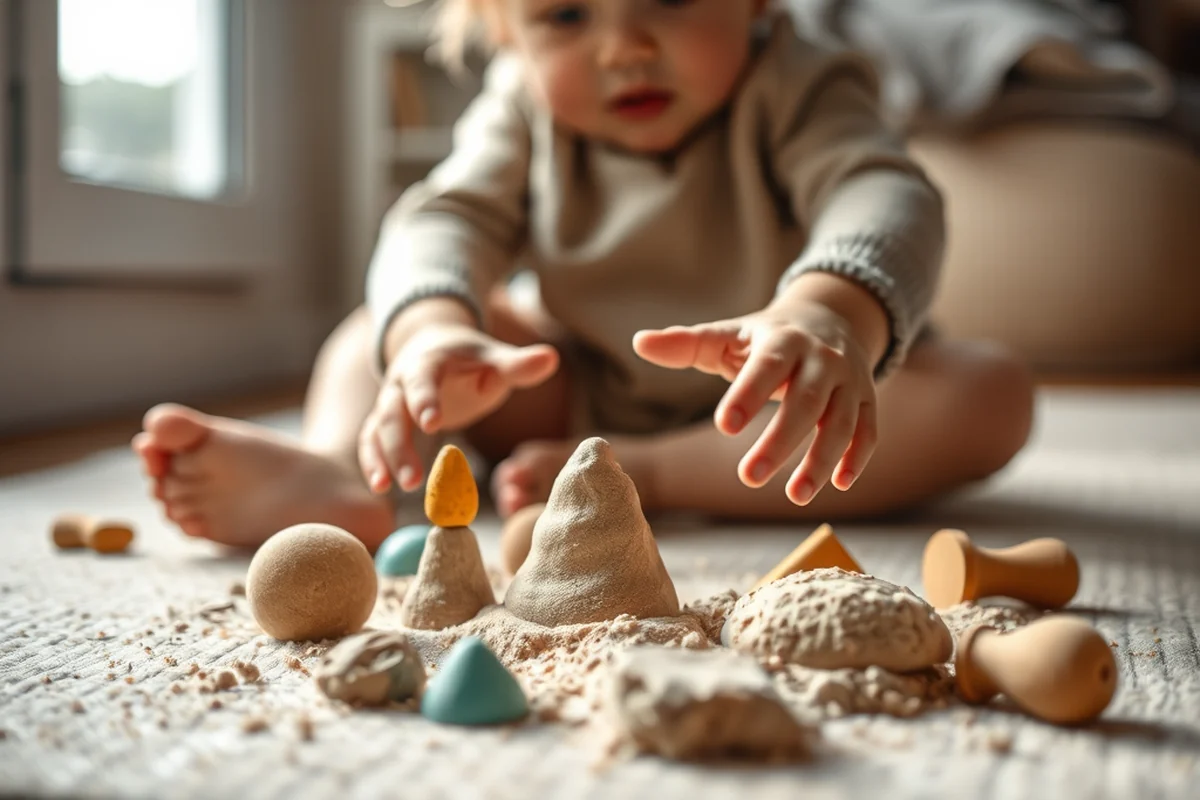
When I first tried making art with natural materials, I was surprised at how quickly my daughter’s creativity took off. We went on a walk, collected sticks and leaves, and spent the afternoon arranging them into patterns on the ground. It was like we were making a giant, living sculpture — and it was completely free of any art supplies.
The key is to let the kids lead the way. I’ve found that when I step back and let them decide what to make and how to arrange the materials, the results are more imaginative and engaging. It’s also important to make sure the area is safe — no sharp sticks or small stones that could be a hazard.
Outdoor art helps kids connect with nature, explore color and shape, and build confidence in their own ideas. My daughter once made a ‘dragon’ by arranging sticks in a spiral, and it was one of the most proud moments I’ve ever witnessed.
Let the kids lead — the best art comes from their imagination, not your guidance.
Related: Simple mud kitchen ideas
The Surprising Benefits of Messy Play for Development
Messy play has a surprising range of benefits, from improving sensory processing to helping kids learn how to manage their emotions. When I let my children get completely covered in mud and water, it was fascinating to see how they handled the mess — some were thrilled, others more hesitant. All of them eventually embraced the experience.
This kind of play helps kids build resilience and problem-solving skills as they figure out how to clean up, how to make something work, and how to handle the inevitable mess. It also encourages cooperation, as kids often work together to build something big or create a shared project.
I’ve noticed that after messy play sessions, my kids are more confident and more willing to try new things. It’s like they’ve built a mental muscle that helps them take risks and explore without fear of getting dirty.
After a messy play session, give kids a few options for cleaning up. I’ve found that letting them choose how to do it gives them a sense of control and makes the process more enjoyable.
“I remember the day my son grabbed a handful of mud and started sculpting what looked like a giant, grumpy-faced frog in our backyard.”— Messysenses editors
Related: Outside mud kitchen for kids
Making the Most of a Limited Space for Mud Play
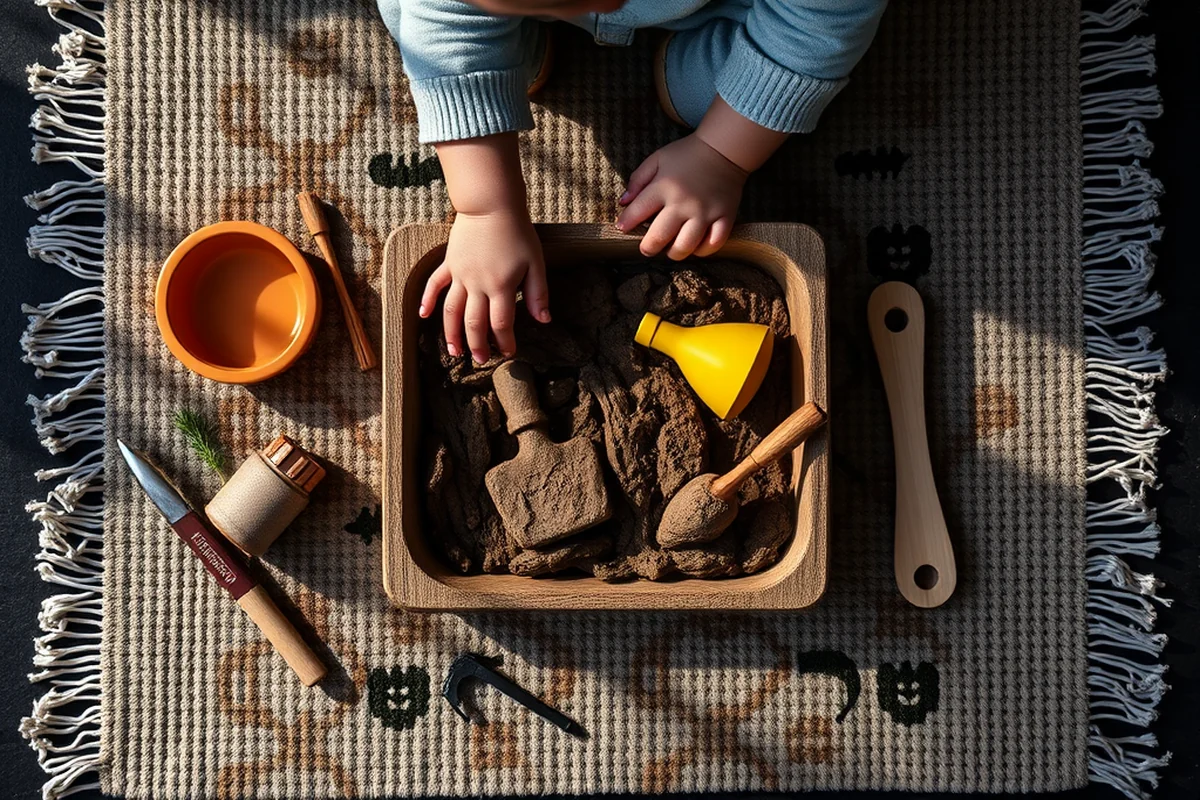
I live in a small apartment with a tiny balcony, but I’ve managed to create a mini mud kitchen using just a couple of buckets, a watering can, and a few rocks. It’s not perfect, but it’s enough to get my kids excited and engaged in play.
The key is to be flexible — even a small space can be transformed with the right materials and mindset. I’ve used the corner of the balcony as a ‘kitchen’ and the railing as a ‘counter,’ and it’s worked surprisingly well.
I’ve also found that using a small, contained area helps manage the mess better. My kids have learned to clean up more quickly when they know the space is limited, and it’s helped keep the rest of the apartment more tidy.
Related: Cheap mud kitchen outdoor art
How to Keep Kids Safe While Having Fun with Mud and Art
When I first started letting my kids play with mud and sticks, I was worried about safety — I didn’t want them to get hurt or make a mess. But with a little planning, it’s possible to keep things safe without limiting their creativity.
I’ve found that choosing a safe area with no sharp objects or hazards is essential. I also make sure they know not to put anything in their mouths that could be harmful, and I keep a first-aid kit nearby just in case.
Surprisingly, the kids have become more responsible over time. They’ve learned to be careful with their materials, and they’ve even started helping each other clean up when they’re done. It’s been a win-win for everyone.
Related: Mud kitchen outdoor art
How to Encourage Creativity in Outdoor Art and Play
Creativity flourishes when kids are given the space and freedom to explore. I’ve found that when I let my daughter lead the way with her art and play, she becomes more engaged and more expressive. She’s even started making up stories about her ‘mud cakes’ and ‘stick sculptures.’
I try to avoid over-directing the process — instead, I ask questions and offer suggestions, but I leave the final decisions to her. This approach helps her feel more in control and more confident in her ideas.
It’s also important to recognize and celebrate their creativity, no matter how messy or unconventional it might be. I’ve learned that even the wildest ideas can lead to the most amazing creations.
Creativity starts with freedom — let kids explore, even if it means a little mess.
Related: Best mud kitchen for kids
Why Outdoor Play Is Better Than Screen Time for Kids
I used to think that screen time was okay — after all, it kept my kids entertained and quiet for long stretches. But over time, I’ve realized that outdoor play is so much more valuable for their development. When they’re outside, they’re moving, exploring, and engaging with the world in ways that no screen can replicate.
Outdoor play helps kids build physical strength, coordination, and even social skills as they interact with other kids and adults. I’ve noticed that my children are more focused, more energetic, and more creative after spending time outside.
I’ve also found that they’re more emotionally balanced when they have the freedom to move and explore. It’s like the outside world helps them reset and recharge in a way that’s hard to achieve indoors.
🌿 Gentle Approach
A slower, more relaxed way to introduce mud kitchens and outdoor art, ideal for children who are new to messy play or need more guidance.
🚀 Fast-Track Method
A quick and easy way to set up a mud kitchen or outdoor art space with minimal preparation and maximum fun.
🧳 Travel/away-from-home
A portable, no-mess approach to outdoor art and play that works well for trips, parks, or even backyards with limited space.
👶 Multiples
Tips for managing messy play with multiple kids, including how to keep things safe, fun, and organized for all.
🔄 Regression Reset
A reset approach for kids who are going through a phase of resistance to messy play, helping them reconnect with the joy of outdoor creativity.
| The mistake | Why it happens | The fix |
|---|---|---|
| Trying to control the play too much. | Too much control can stifle creativity and make the experience less enjoyable for the child. | Let the child lead the play and focus on encouraging exploration and imagination. |
| Not preparing for cleanup. | Messy play can get out of hand quickly if you don’t plan ahead. | Set up a designated cleanup area with materials like buckets, wet wipes, and a towel. Make it part of the process. |
| Using too many materials at once. | Too many options can overwhelm the child and make the experience confusing. | Start with a few simple materials and gradually introduce more as the child becomes more engaged and interested. |
| Forcing a specific outcome. | Forcing a specific outcome can make the child feel like they’re not in control of the play and may discourage them from exploring their own ideas. | Let the play be open-ended and allow the child to make decisions about what to create and how to do it. |
Mud Kitchen & Outdoor Art Tips
Common Questions
How can I keep the mess contained during outdoor art or mud kitchen play?
What should I do if my child is hesitant to get messy?
How can I encourage my child to clean up after playing with mud or art materials?
Are there any safety concerns with outdoor play and art?
References
- Head Start Design Guide - GovInfo (govinfo.gov)
- Rules & Regulations Indicator Manual - GA Decal Bright from the Start (decal.ga.gov)
Cite this guide
Messysenses (2026). Mud Kitchen & Outdoor Art Tips. https://messysenses.com/mud-kitchen-outdoor-art-tips/
Feel free to cite or share this guide.