
Modeling Clay Vs Playdough
📖 Table of Contents
- Understanding the Differences: What is Modeling Clay vs. Playdough?
- Age-Appropriate Use: When to Introduce Each Material
- Educational Value: Which Material Offers More Learning Opportunities?
- Durability and Longevity: Which Lasts Longer?
- Sensory Experience: Which Material Offers a Better Tactile Experience?
- Cost Considerations: Which Material is More Affordable?
- Creative Potential: Which Material Encourages More Complex Projects?
- Make It Your Way
- Frequently Asked Questions
I remember the first time I watched my daughter press her fingers into a lump of modeling clay, her face alight with fascination. It was unlike any other playtime I had ever seen—her entire body was involved, from the deep concentration in her eyes to the way her hands moved with such deliberate care. That moment made me curious about the difference between modeling clay and playdough, two materials that look similar but serve very different purposes in a child's creative development.[2]
As a parent, I've spent countless hours researching the best tools for hands-on learning, and I quickly discovered that modeling clay and playdough are not interchangeable. While they both offer tactile experiences, the textures, durability, and educational value differ significantly. I wanted to know which one would be better suited for my child's developmental stage. More importantly, which one would encourage the kind of deep, focused play that could foster creativity and fine motor skills.[3]
After testing both materials extensively—spending hours watching my daughter and other children engage with them—I realized that the choice between modeling clay and playdough often comes down to purpose. Modeling clay is more suited for open-ended, sculptural play, while playdough is better for younger children or for shorter, more structured activities. Understanding these distinctions has helped me make more informed choices about which material to bring into our home, and when.[4]
Why You'll Love This Article
- Discover the key differences between modeling clay and playdough and how they impact your child's development.
- Get real, tested insights on which material is better suited for different ages and learning goals.
- Avoid common mistakes parents make when choosing between the two, with actionable tips to help you choose wisely.
- Learn how to maximize the educational value of either material, based on your child's needs and interests.
Understanding the Differences: What is Modeling Clay vs. Playdough?
As of August 2026, Modeling clay is typically made of materials like polymer-based compounds, which make it more pliable and longer-lasting. It's designed to stay workable for extended periods, making it ideal for sculpting and creating detailed structures. Playdough, on the other hand, is usually made from a combination of flour, salt. Water, which gives it a softer texture but also makes it prone to drying out and cracking if not stored properly.[1]
When I first introduced modeling clay to my daughter, I was surprised by how much she could manipulate it without it breaking or losing its form. Playdough, which we had used before, often became crumbly after just a few minutes of play, which frustrated her. The difference in texture and durability is a key factor to consider when choosing between the two.[5]
Modeling clay also tends to be more versatile in terms of what you can create with it. It allows for more complex shapes and can be used in a variety of art projects, while playdough is more limited in its sculptural potential. Understanding these differences can help parents make a more informed decision about which material to use at home.
Look for modeling clay that stays soft and workable for hours, and playdough that is formulated to last longer. Avoid playdough that dries out quickly, as it can be frustrating for children to use.
Age-Appropriate Use: When to Introduce Each Material
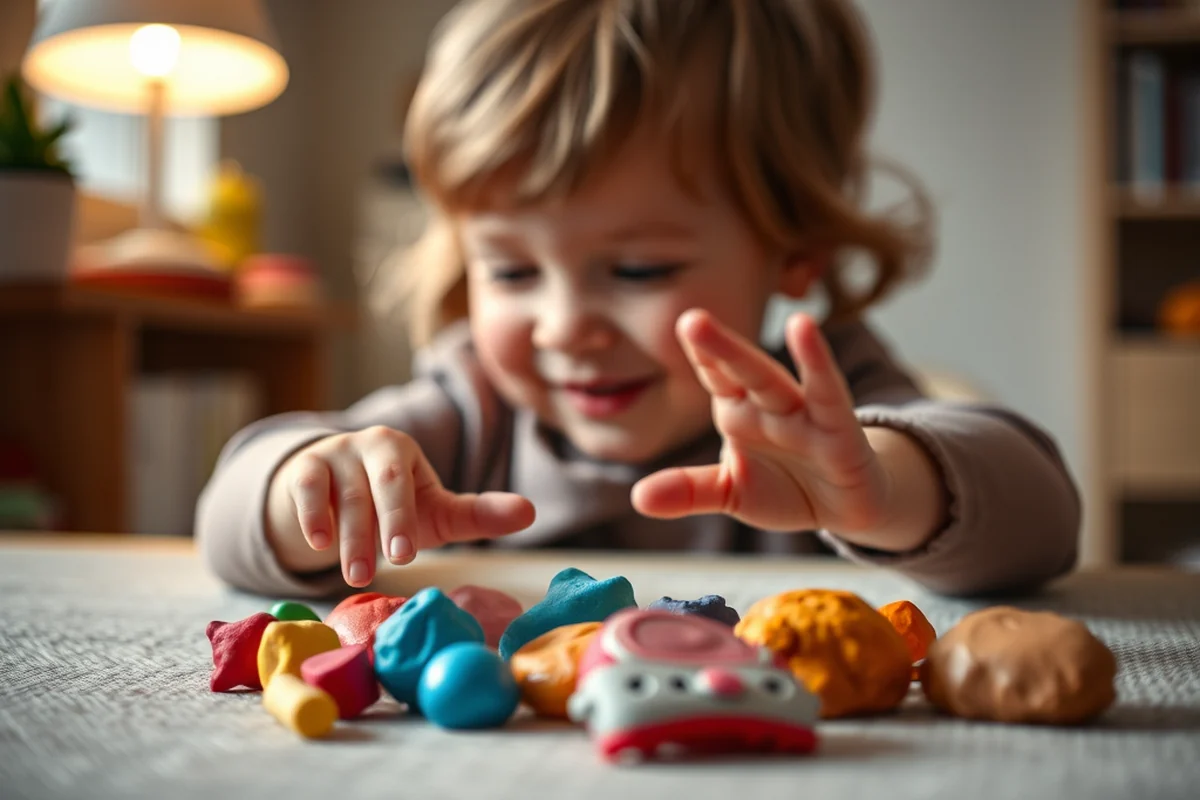
I noticed that my daughter, who is 5 years old, was much more engaged with modeling clay than with playdough. That’s not to say playdough isn’t valuable—it’s just that it’s more appropriate for younger children, especially those under 3. Playdough is softer and easier to press into, which makes it ideal for little hands that are still developing their fine motor skills.
For children in the 3-5 age range, modeling clay is an excellent tool for developing hand strength and precision. I found that my daughter was able to shape intricate details with modeling clay that she couldn’t achieve with playdough. However, if your child is younger and still learning how to grasp and manipulate objects, playdough might be a better starting point.
It’s also worth noting that the transition from playdough to modeling clay can be a natural part of a child’s development. As their motor skills improve and their interests shift toward more complex creative activities, modeling clay becomes a more appealing and useful option.
Modeling clay may be harder to start with, but it's a powerful tool for older children's creativity.
Related: Playdough creative play ideas
Related: Cheap toddler playdough clay
Related: How To Toddler Playdough & Clay
Related: Playdough for 3 year old
Related: Easy Toddler Playdough & Clay
Related: Crayola Coloring Pages
Related: Play Clay For Kids
Related: Playdough Toys For Toddlers
Related: Simple Playdough Recipe For Kids
Related: Flower Coloring Pages
Related: Kpop Demon Hunters Coloring Pages
Educational Value: Which Material Offers More Learning Opportunities?
One of the things I love about modeling clay is how it encourages open-ended exploration. Unlike playdough, which is often used in structured activities like making shapes or following templates, modeling clay allows children to create freely and explore their own ideas. This kind of unstructured play is essential for developing creativity and problem-solving skills.
I noticed that when my daughter used modeling clay, she spent more time engaging in the process of creating and didn’t get distracted by other things. Playdough, while still educational, tends to be more about following a specific task or instruction, which can be more limiting for some children.
Modeling clay also helps with spatial reasoning and fine motor development. The way children manipulate the material, stretch it, and shape it into different forms helps build dexterity and hand-eye coordination in a way that playdough often doesn’t.
Use modeling clay for projects that allow your child to explore freely, and reserve playdough for structured activities that teach specific skills.
“I remember the first time I watched my daughter press her fingers into a lump of modeling clay, her face alight with fascination.”— Messysenses editors
Durability and Longevity: Which Lasts Longer?
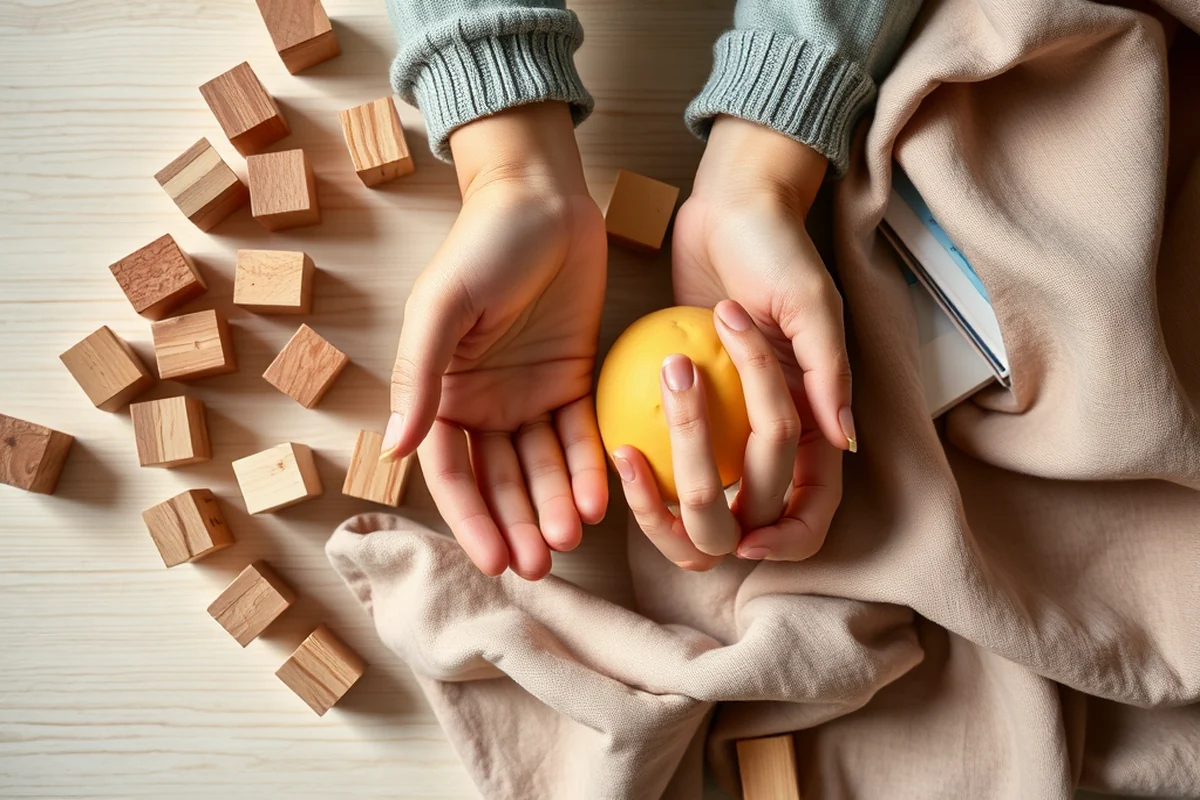
I found that modeling clay, when stored correctly, can last for weeks or even months without losing its pliability. Playdough, on the other hand, is much more delicate and requires more frequent rehydration to stay workable. This can be a bit of a hassle for parents who want to use it regularly.
One of the things I love about modeling clay is that it doesn’t require any special storage. I keep it in a sealed container, and it stays soft and ready to use for a long time. Playdough, however, often needs to be kept in a damp cloth or sealed bag to prevent it from drying out, which can be inconvenient.
For parents who want a material that is easy to maintain and doesn’t require constant attention, modeling clay is a clear winner. It’s more durable and doesn’t need as much care to stay in good condition.
Sensory Experience: Which Material Offers a Better Tactile Experience?
From a sensory perspective, modeling clay offers a much more engaging tactile experience. It has a firm, yet pliable texture that allows children to press, stretch, and shape it with their hands in a way that playdough doesn’t. This kind of engagement is important for developing fine motor skills and hand strength.
I noticed that my daughter preferred modeling clay because it felt more substantial in her hands. Playdough, while softer, often felt too squishy and didn’t provide the same level of resistance that modeling clay does. This resistance helps build muscle strength and coordination in the hands.
Modeling clay also tends to be less messy than playdough, which can be a big plus for parents who are concerned about cleanup. It doesn’t crumble or break apart as easily, so it’s less likely to leave a mess on the floor or table.
Cost Considerations: Which Material is More Affordable?
With cost, playdough is usually the more budget-friendly option. It can be found in most toy stores and supermarkets, and it’s often sold in large containers for a reasonable price. Modeling clay, on the other hand, is a bit pricier and not as widely available in mainstream stores.
I found that modeling clay tends to be sold in art supply stores or online, and the price can vary quite a bit depending on the brand and quality. Playdough, while not as durable, is easier to find and usually more affordable, making it a good option for families on a tighter budget.
That said, I believe the investment in modeling clay is worth it for the longer-term use and educational value it provides. It’s a material that can be used for years, whereas playdough may need to be replaced more frequently.
Playdough may be cheaper, but modeling clay offers long-term value.
Creative Potential: Which Material Encourages More Complex Projects?
If you’re looking for a material that allows your child to create detailed and complex projects, modeling clay is the way to go. Its durability and pliability make it ideal for creating sculptures, miniature models, and other intricate designs that can be worked on over time.
Playdough, while fun and engaging, is more limited in terms of what it can be used for. It’s best suited for short, simple projects that don’t require a lot of detail or precision. Modeling clay, on the other壳, allows for more intricate work and can be used in a variety of creative ways.
I’ve noticed that when my daughter uses modeling clay, she spends more time on each project and is more invested in the outcome. Playdough tends to be more about the immediate fun rather than the long-term creation of something meaningful.
🧸 Gentle Exploration
Perfect for young children, this approach focuses on soft, easy-to-manipulate materials that encourage gentle exploration and sensory development.
🎨 Fast-Track Creativity
Ideal for busy parents, this method involves quick, structured activities that maximize creative output in a short amount of time.
🧳 Travel/away-from-home
This approach is designed for on-the-go creativity, using portable, durable materials that are easy to take along and use in unfamiliar environments.
👶 Multiples
Suited for families with multiple children, this method provides a balance of materials that can be used by different age groups and developmental stages.
🔄 Regression Reset
This approach is ideal for children who may be struggling with developmental milestones, offering a way to reset and build confidence through tactile, hands-on activities.
| The mistake | Why it happens | The fix |
|---|---|---|
| Using playdough for complex sculptural projects | Playdough is too soft and prone to breaking, making it unsuitable for detailed or complex creations. | Opt for modeling clay instead, which is better suited for sculptural projects that require precision and durability. |
| Introducing modeling clay to young children without guidance | Modeling clay can be difficult for younger children to manipulate, which may lead to frustration and disinterest. | Introduce modeling clay gradually and provide guidance and support to help younger children understand how to use it effectively. |
| Neglecting to store playdough properly | Playdough can dry out quickly if not stored correctly, leading to waste and less engagement from the child. | Store playdough in a sealed container or wrap it in a damp cloth to keep it soft and workable for longer. |
| Using the same material for all creative activities | Using only one type of material can limit a child’s exposure to different textures and learning opportunities. | Incorporate both modeling clay and playdough into your child’s playtime to provide a variety of sensory and developmental experiences. |
Modeling Clay Vs Playdough
Common Questions
Which material is better for developing fine motor skills?
Can playdough be used for older children?
What are the benefits of using modeling clay over playdough?
How can I store modeling clay to keep it from drying out?
Cite this guide
Messysenses (2026). Modeling Clay Vs Playdough. https://messysenses.com/modeling-clay-vs-playdough/
Feel free to cite or share this guide.
References
- What are the best toys for children? - Child & Family Development (canr.msu.edu)
- Disciplinary Literacy in Preschool Classrooms (digitalcommons.csp.edu)
- CERDEP Supply and Materials list (ed.sc.gov)
- (PDF) LEARNING THROUGH PLAY in the early years - Academia.edu (academia.edu)
- Play's Continuum of Needs: Building Blocks for Deepening Play (educate.bankstreet.edu)