
Simple Playdough Recipe For Kids
📖 Table of Contents
I remember the first time my daughter asked me to make playdough with her. She was about 3, and her eyes lit up when I pulled out a bowl and a few simple ingredients. It was the kind of moment that reminded me how powerful simple, hands-on activities can be for kids. Making playdough together became our ritual — a way to bond, to be creative, and to learn without even realizing it. That’s why I want to share a simple playdough recipe for kids that requires just a few everyday items and a little bit of time.[1]
The best part about this playdough recipe for kids is that it’s not only easy to make but also safe and non-toxic, which is a big concern for any parent. I’ve made this dozens of times with my kids, and each time, it’s been a hit. Whether we’re using it for sensory play, imaginative play, or even as a way to teach basic math and color mixing, this playdough has always been a hit with our kids. It’s messy, but it’s also incredibly rewarding.[2]
What I love most about this playdough recipe for kids is that it’s flexible. You can tweak it to suit different ages, abilities, and interests. My toddler loves the squishy texture, while my older daughter likes adding glitter and making her own designs. It’s also a great way to engage kids who are on the autism spectrum or who have sensory processing needs. This simple playdough recipe for kids has become a staple in our home, and I know it can be for yours too.[3]
Why You'll Love This Simple Playdough Recipe for Kids
- Encourages creativity and imagination in young children
- Easy to make with common household ingredients
- Safe and non-toxic for kids of all ages
- Promotes sensory development and fine motor skills
Why This Playdough Recipe Works for Kids
As of September 2026, there’s something about the texture of playdough that feels comforting to kids. It’s squishy, stretchy, and easy to manipulate — a perfect medium for little hands to explore. I’ve noticed that my daughter becomes totally absorbed in her play when using this homemade playdough. It’s not just about the material, though — it’s about the freedom it gives her to create, shape, and destroy without worry.[4]
The fact that the playdough is non-toxic is a major plus for any parent. I used to be nervous about using store-bought options, but since making our own, I’ve felt much more at ease. The ingredients are simple, and the process is straightforward — you can even involve your kids in the mixing, which makes it even more special.
What I love most is that the playdough is flexible. If your child is sensitive to certain textures, you can adjust the recipe by adding more cornstarch or a bit of oil to make it smoother. This adaptability makes it a great option for kids with sensory processing differences, which is something I’ve personally found very helpful.
If your child prefers softer or firmer playdough, adjust the ratio of cornstarch and flour. More cornstarch makes it smoother and easier to mold.
How to Make Playdough at Home
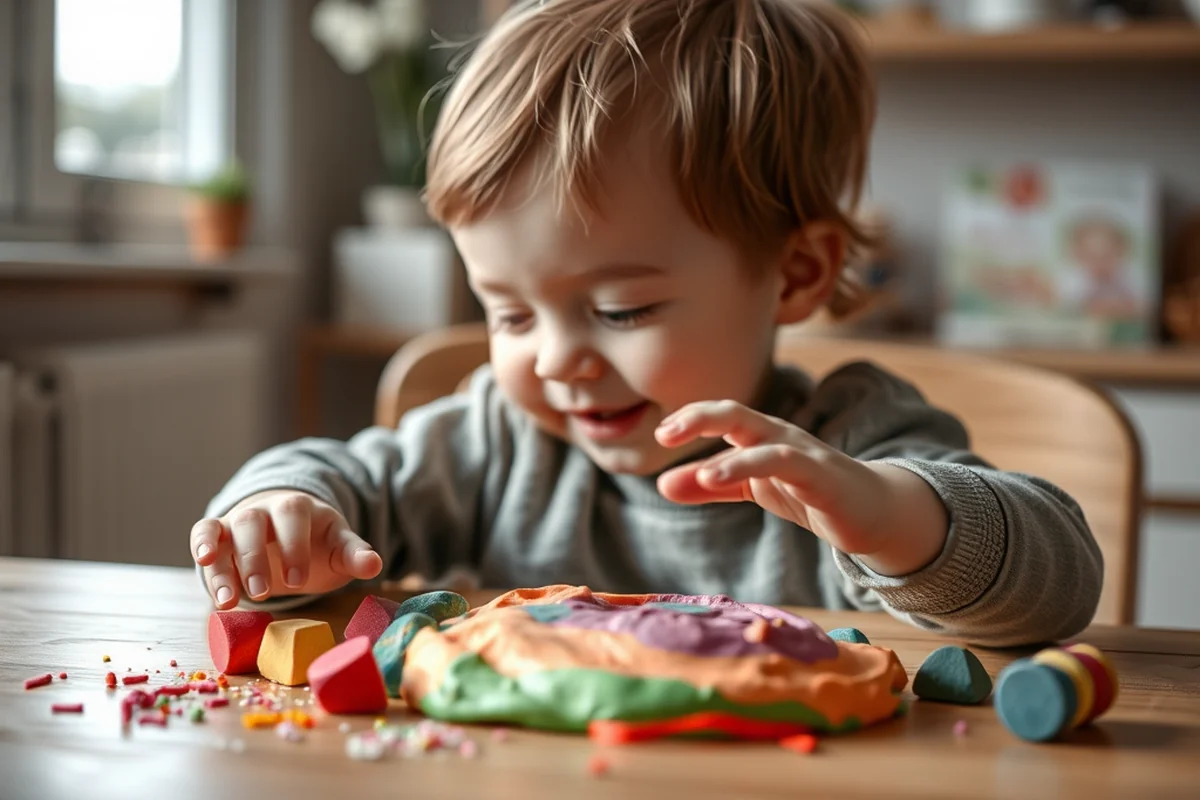
I’ve made this playdough recipe for kids so many times that it’s become second nature. You start by mixing together the dry ingredients — flour, salt, and cornstarch — in a bowl. Then you add water and a bit of oil or cream of tartar, and stir until it comes together into a dough. It’s important to mix it well and work it with your hands to get it just right. The process itself is a great way to engage your child, and they always enjoy helping out.
I’ve found that using a little bit of cream of tartar helps the playdough hold its shape better and makes it less sticky. If you don’t have it on hand, a small amount of oil can work too. This is something I learned the hard way — the first time I made it without any of these, the playdough was too sticky and didn’t hold up well.
Once it’s all mixed, you knead it for a few minutes until it becomes smooth and pliable. The playdough is ready to use almost immediately, and the best part is that you can make a big batch once and use it over several days. I’ve found that it lasts about three days in an airtight container, which is perfect for busy parents.
The best part is that you can make a big batch once and use it over several days.
Related: Children playing with playdough
Related: Playdough for 3 year old
Related: How to make playdough for kids
Related: Is play dough clay
Related: Playdough ideas for preschool
Sensory Benefits of Homemade Playdough
I’ve noticed that my daughter really enjoys the tactile experience of playing with homemade playdough. She likes pressing her fingers into it, stretching it, and even using it to make shapes. It’s a great way for her to explore different textures and build her fine motor skills. This playdough recipe for kids has become a favorite part of her day, and it’s something she often requests.
For kids with sensory processing differences, homemade playdough can be a great tool. I’ve used it with a few friends who have autism, and they’ve really enjoyed playing with it. It helps them develop their tactile awareness and can even be a calming activity for them. The fact that we can tailor the texture makes it even more valuable.
I’ve also found that playdough is a good way to help kids work on their hand-eye coordination. My daughter often uses it to make small shapes, which she then tries to fit into slots or match with other pieces. It’s a fun and engaging way to build these important skills.
Try using the playdough in sensory bins or with other tools like cookie cutters or stamps to enhance the experience.
“I remember the first time my daughter asked me to make playdough with her.”— Messysenses editors
Creative Play with Homemade Playdough
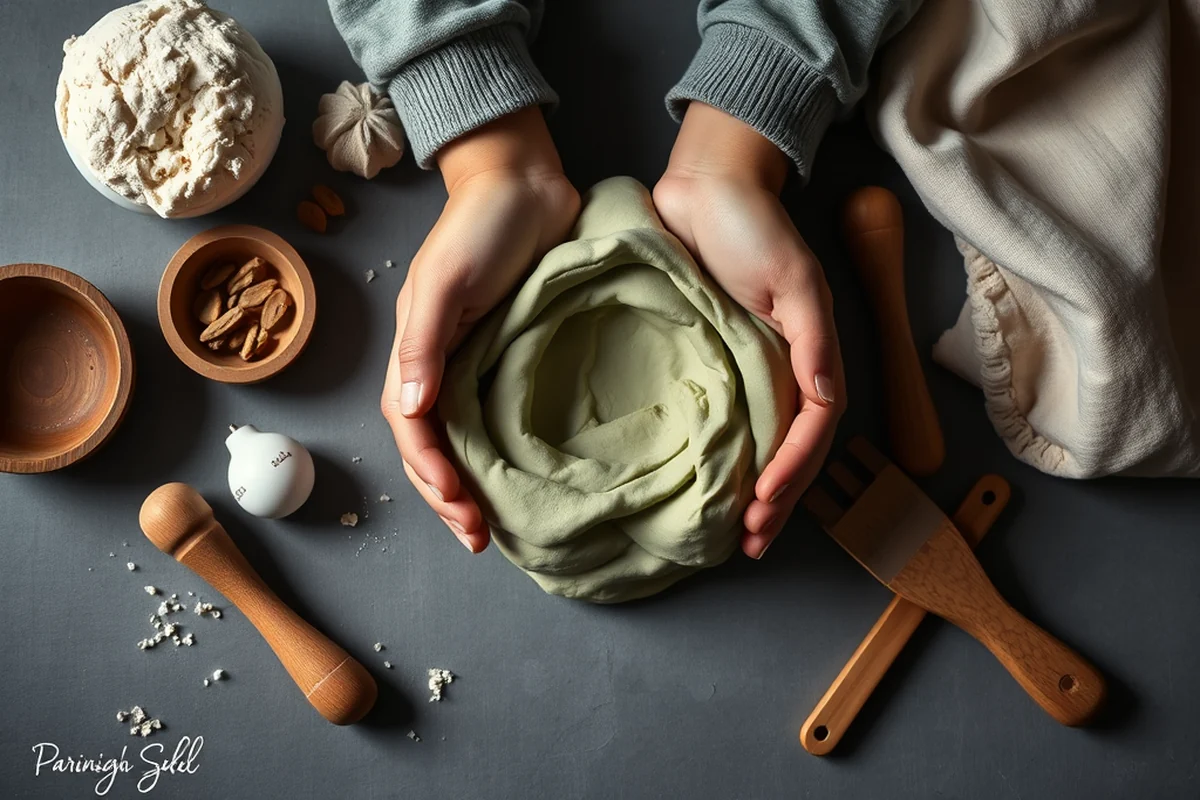
One of the best things about this playdough recipe for kids is that it’s not limited to just playing with it in your hands. We’ve used it to make pretend food, build little houses, and even create simple sculptures. My daughter loves to make her own little play food with it, which is a great way for her to explore her imagination.
I’ve also used it as a way to teach my daughter about shapes and colors. She’s learned to recognize different shapes by making them and even started to count how many of each she can create. It’s been a fun and educational experience for both of us.
The possibilities are truly endless. I’ve seen my kids use it for storytelling, for pretending to be chefs, and even for making little animals. It’s amazing how much creativity can come from something as simple as playdough.
Making Playdough a Family Activity
I’ve found that making playdough together is a great way to spend quality time with my kids. It’s not just about the playdough itself — it’s about the interaction and the laughter that comes with it. My husband and I often join in, and it becomes a time when we all get to be creative together.
I’ve noticed that when we make playdough as a family, my kids are more excited to use it later. It’s a way for them to feel involved in the process and to see that making things together is something we all enjoy. It’s also a great way to teach them about teamwork and following simple instructions.
Another benefit is that it’s a great way to get my kids to help out in the kitchen. I’ve had them measure the ingredients, stir the mixture, and even help with kneading. It’s a fun and educational way for them to learn about measurements and mixing, all while having fun.
Storing and Reusing Playdough
I’ve learned that storing the playdough in an airtight container is the best way to keep it from drying out. I’ve tried leaving it out on the counter, and it tends to get hard and lose its pliability. An airtight container keeps it soft and usable for a few days.
I’ve also found that if you want to reuse the playdough later, storing it in the refrigerator is a good option. I’ve done this a few times, and it works well — you just need to let it come to room temperature before using it again. It’s a simple fix that makes the playdough last longer.
Another tip I’ve found useful is to add a little bit of oil to the dough before storing it. This helps keep it from drying out and keeps it soft for longer. It’s a small step that makes a big difference in how long the playdough lasts.
Proper storage ensures that your homemade playdough stays fresh and ready to use for future play sessions.
Making Playdough a Learning Tool
I’ve found that using playdough as a learning tool is a great way to teach my daughter basic concepts. We’ve used it to practice counting by making different numbers of shapes, and even to learn about letters by pressing them into the dough. It’s been a fun and interactive way for her to learn.
I’ve also used it to teach her about colors and shapes. We’ve made different colored playdough and used it to match colors or to sort shapes. It’s been a great way for her to develop her cognitive skills while having fun.
Another benefit is that it helps with fine motor development. My daughter has been working on her hand strength and coordination by kneading the dough and pressing it into different molds. It’s been a great way for her to build these important skills.
👶 Gentle Playdough for Toddlers
A softer, less sticky version of playdough that’s perfect for little hands and sensory play.
⏱️ Fast-Track Playdough
A quicker version of the recipe that uses pre-measured ingredients for a faster, mess-free play session.
🧳 Travel Playdough
A portable version of playdough that’s easy to take on the go and perfect for road trips or park days.
📦 Multiple Playdough Batches
A way to make several batches of playdough at once for multiple kids or to keep for future play sessions.
🔄 Regression Reset Playdough
A version of playdough that helps kids with sensory processing or developmental needs reset and engage in play more easily.
| The mistake | Why it happens | The fix |
|---|---|---|
| Storing the playdough in a non-airtight container | This can cause the playdough to dry out and become hard over time. | Always store the playdough in an airtight container to keep it fresh and usable for future play sessions. |
Simple Playdough Recipe For Kids
Common Questions
Can I make this playdough ahead of time?
Is this playdough safe for young children?
How do I store the playdough for longer?
Can I add colors to the playdough?
References
- Infant and Toddler Activity Pages: Marshmallow Edible Playdough (canr.msu.edu)
- Art and Creativity | Center for Child and Family Studies - UC Davis (ccfs.ucdavis.edu)
- Children's Center Resources - Cuesta College (cuesta.edu)
- Paint, Playdough, Clay and other Fun Recipes (decal.ga.gov)
Cite this guide
Messysenses (2026). Simple Playdough Recipe For Kids. https://messysenses.com/simple-playdough-recipe-for-kids/
Feel free to cite or share this guide.