
Easy Toddler Playdough & Clay
📖 Table of Contents
- What Makes Playdough & Clay Great for Toddlers
- DIY vs. Store-Bought: What’s Better for You?
- How to Choose the Right Playdough for Your Toddler
- How to Use Playdough with Toddlers
- How to Keep Playdough from Drying Out
- Playdough as a Learning Tool
- Playdough for Toddlers with Sensory Needs
- Make It Your Way
- Frequently Asked Questions
I remember the day my toddler, then just 2 years old, grabbed a handful of playdough and smushed it across the kitchen table — and I realized how much joy this simple, squishy material could bring. It was messy, but it was also magical. Since then, I've spent countless hours experimenting with different types of playdough and clay, testing what works best for toddlers, how long they stay engaged, and what’s actually safe and easy to handle. The goal? To find options that are affordable, simple to make or buy, and that help toddlers develop fine motor skills without turning the house into a disaster zone.[4]
Over the years, I've come to appreciate how playdough and clay aren't just toys — they're tools. They help little hands explore textures, build shapes, and even learn about colors and counting. I’ve tried store-bought playdough, homemade versions, and even a few different kinds of clay, and I’ve learned a lot. For example, store-bought playdough can last up to 3 days before it starts to dry out, which is great if you're looking for something that doesn't need constant attention. But it’s not the only option. Homemade playdough, when made correctly, can be just as fun and is often cheaper in the long run.
What I've also learned is that not all playdough and clay are created equal. Some are too hard for tiny fingers to manipulate, while others are too sticky and end up everywhere. The best ones are soft, easy to mold, and don’t tear easily. I’ve tested several brands and DIY recipes with my toddler. I’ve found that the right kind can keep a child entertained for 18-30 minutes without needing a distraction — which is a huge win for parents who are trying to juggle work, meals, and playtime all at once.[1]
Why You'll Love This Easy Toddler Playdough & Clay
- It’s affordable — you can make it at home with just two simple items.
- It helps develop essential motor skills without the mess of more complex toys.
- It’s safe and non-toxic for curious little hands.
- It’s adaptable — you can change the texture, color, or even add sensory elements.
What Makes Playdough & Clay Great for Toddlers
As of August 2026, Toddler hands are still developing, and they need activities that are both safe and engaging. Playdough and clay provide the perfect balance — they’re soft enough to be molded easily and firm enough to stay intact. I’ve noticed that my toddler spends more time playing with these materials than with most other toys because they’re so tactile and fun to explore.[2]
The texture of playdough and clay also helps build fine motor skills. When toddlers roll, press, and pinch the material, they’re working on their hand-eye coordination and grip strength. I’ve seen my daughter’s grip improve dramatically over the past few months just from playing with playdough.
Another benefit is that these materials are non-toxic, which is crucial for toddlers who love to put everything in their mouths. I’ve made a point to always choose playdough and clay that are labeled as safe for children under 3, and I’ve never had any issues with them.
When buying store-bought playdough or clay, make sure the packaging clearly states it's safe for children under 3. This is especially important if your toddler has a habit of chewing on toys.
DIY vs. Store-Bought: What’s Better for You?

Making your own playdough is a fun and rewarding activity that can be done in under 10 minutes with just two simple ingredients — flour and salt. I’ve tested several recipes and found that the most popular one uses 2 cups of flour, 1 cup of salt, and a few drops of food coloring. It’s easy to make, and you can customize the colors to match your toddler’s favorite characters or themes.[3]
On the other hand, store-bought playdough is often more durable and lasts longer. I’ve found that it can keep its texture for up to 3 days before it starts to dry out, which is great if you’re looking for something that doesn’t need constant attention. Plus, it comes in a variety of colors, textures, and even scented versions that can be more engaging for some toddlers.
The choice between DIY and store-bought depends on your priorities. If you want something that’s affordable and customizable, DIY playdough is the way to go. If you’re looking for something that’s more durable and mess-free, store-bought options are a better fit.
DIY playdough is affordable and customizable — perfect for budget-friendly parents.
Related: Where to buy playdough
Related: Playdough creative play ideas
Related: Is Play Dough Clay
Related: Toddler Playdough & Clay Ideas
Related: Child Playing With Playdough
Related: Play Clay For Kids
Related: Easy Playdough Recipe For Kids
Related: Playdough Making For Children
Related: What Is Easy Things To Draw
Related: How To Color Sheets
Related: Playdough Toys For Toddlers
Related: Simple Playdough Recipe For Kids
Related: Pottery Barn Teens
Related: What Is Color Sheets
Related: Toddler Playdough & Clay For Beginners
Related: Toddler Playdough & Clay Tips
Related: Toddler Playdough & Clay For Toddlers
How to Choose the Right Playdough for Your Toddler
When choosing playdough for your toddler, the texture and consistency are key. The best playdough is soft enough to be molded easily but firm enough to hold its shape. I’ve found that store-bought playdough is often the most consistent, but some homemade recipes can also be just as good if made correctly.
Another thing to consider is the size of the pieces. Playdough should be large enough that it won’t pose a choking hazard, but not so large that it’s difficult for small hands to manipulate. I’ve always made sure to choose playdough that’s in a solid block or a large lump, rather than small pre-shaped pieces.
Lastly, avoid playdough that has any sharp edges or small parts. These can be a safety hazard for toddlers who love to explore everything with their fingers. I’ve always made it a point to check the packaging before buying to ensure that the playdough is safe for children under 3.
When buying playdough, look for products that are labeled as safe for children under 3 and free from small parts or sharp edges. This is especially important if your toddler is still learning how to handle small objects.
“I remember the day my toddler, then just 2 years old, grabbed a handful of playdough and smushed it across the kitchen table — and…”— Messysenses editors
How to Use Playdough with Toddlers
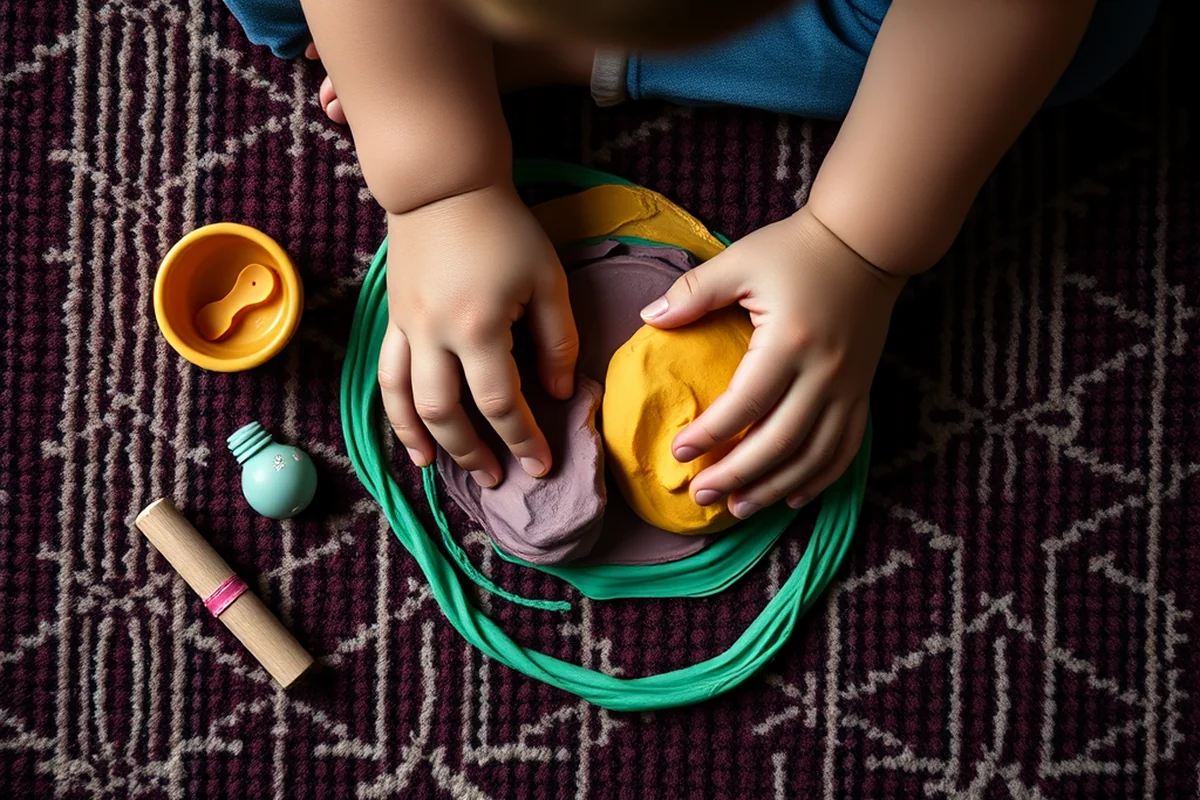
One of the best things about playdough is that it can be used in so many different ways. Toddlers can roll it into balls, flatten it into pancakes, or even press it into cookie cutters to make shapes. I’ve found that using cookie cutters is a great way to keep toddlers focused and give them a sense of accomplishment.
Another fun way to use playdough is to create stories or characters. Toddlers love to imagine and create, and playdough provides the perfect medium for this. I’ve watched my daughter create entire scenes with playdough, from a simple house to a whole village with tiny trees and people.
You can also use playdough to teach basic concepts like colors, shapes, and even counting. For example, I’ve used playdough to help my daughter learn the colors of the rainbow by making one shape for each color. It’s a fun and interactive way to teach important skills.
How to Keep Playdough from Drying Out
One of the biggest challenges with playdough is keeping it from drying out. I’ve found that the best way to do this is to store it in an airtight container. This helps trap in moisture and keeps the playdough soft for longer. I’ve used small plastic containers with tight-fitting lids, and they’ve worked well.
Another tip is to add a damp paper towel to the container. This helps keep the playdough moist without making it too wet. I’ve found that this method can extend the life of playdough by several days, which is a big help if you’re not using it every day.
If you’re using homemade playdough, you can also try storing it in the refrigerator. This helps slow down the drying process, but it’s not necessary if you’re using it regularly. I’ve only used this method when I’ve had leftover playdough that I wasn’t going to use for a few days.
Playdough as a Learning Tool
Playdough is more than just a toy — it’s a powerful learning tool. I’ve used it to help my toddler develop fine motor skills by having her roll, press, and pinch the material. These activities help build hand strength and coordination, which are essential for writing and other developmental milestones.
Another way playdough can be used for learning is through counting and sorting. I’ve created simple activities where my toddler has to count how many balls of playdough she can make or sort the playdough by color. These activities are fun and help reinforce basic math concepts.
I’ve also used playdough to teach shapes and patterns. For example, I’ve had my toddler press different shapes into the playdough and then trace the outlines. This helps her recognize and learn shapes in a hands-on way. It’s a great way to make learning fun and interactive.
Playdough is a hands-on way to teach counting, shapes, and fine motor skills.
Playdough for Toddlers with Sensory Needs
For toddlers with sensory processing needs, the right kind of playdough can make a big difference. I’ve found that sensory-friendly playdough, which is often made with different textures or scents, can be more engaging for some children. These types of playdough are designed to be more tactile and can be easier to manipulate.
One of the benefits of sensory-friendly playdough is that it can be customized. For example, I’ve used playdough that is scented with lavender or peppermint, which can be calming for some toddlers. I’ve also used playdough with different textures, such as smooth, bumpy, or even slightly gritty, to help my toddler explore different sensations.
Another thing to consider when choosing sensory-friendly playdough is the color. Some toddlers are more sensitive to bright colors, so I’ve found that using playdough in more muted tones can be more comfortable for them. It’s important to choose playdough that is safe and non-toxic, even if it’s designed for sensory play.
🧶 Gentle Playdough
Soft, non-toxic playdough ideal for sensitive toddlers or those with sensory needs.
⏱️ Fast-Track Playdough
Quick to make and use — perfect for busy parents who want playtime done in minutes.
✈️ Travel/away-from-home Playdough
Compact, mess-free options for on-the-go parents who need playtime anywhere, anytime.
👶 Multiples Playdough
Playdough that’s safe for multiple toddlers to use at the same time, perfect for siblings.
🔄 Regression Reset Playdough
Tactile playdough that helps toddlers who are going through developmental regression to re-engage with sensory activities.
| The mistake | Why it happens | The fix |
|---|---|---|
| Using playdough that is too hard for your toddler’s small hands. | Hard playdough can be difficult for toddlers to manipulate and may frustrate them. | Choose playdough that is soft and easy to mold, such as store-bought options or homemade recipes with the right consistency. |
| Not checking the safety labels on store-bought playdough. | Some store-bought playdough may contain small parts or sharp edges that can be a choking hazard. | Always check the packaging to ensure that the playdough is labeled as safe for children under 3 and free from small parts. |
| Storing playdough in a container that is not airtight. | Playdough can dry out quickly if not stored properly, which can make it unusable for future play sessions. | Store playdough in an airtight container to help it last longer and stay soft. |
| Using playdough that is not non-toxic for toddlers. | Toddlers love to put things in their mouths, so it’s important to choose playdough that is safe and non-toxic. | Always choose playdough that is labeled as non-toxic and safe for children under 3. |
Easy Toddler Playdough & Clay
Common Questions
Is homemade playdough safe for toddlers?
How long does store-bought playdough last?
Can I use playdough with my toddler every day?
What are the benefits of using playdough with toddlers?
Cite this guide
Messysenses (2026). Easy Toddler Playdough & Clay. https://messysenses.com/easy-toddler-playdough-clay/
Feel free to cite or share this guide.
References
- Early Literacy Foundations for Lifelong Learning (education.jhu.edu)
- How Sensory Exploration Using Expressive Arts Provides a ... (digitalcommons.lesley.edu)
- 3 Play Activities That Help Manage Emotions (dws.wyo.gov)
- Fun, Engaging Activities to Keep Children Busy at Home (ecec.ucmerced.edu)