
Toddler Outdoor Mud Kitchen
📖 Table of Contents
I'll never forget the day my daughter dug her hands into the cool, damp earth and said, 'Mama, this is better than the sandbox!' It was a moment of pure, unfiltered joy — and it happened at our very first toddler outdoor mud kitchen. The idea was simple: create a space where my child could explore, create, and play without the confines of a traditional kitchen. What I didn't expect was the level of engagement, learning, and sensory development that would come from this simple setup.
The toddler outdoor mud kitchen is more than just a place for messy play — it's a gateway to creativity, science, and early childhood development. I set up my first one with nothing more than a few buckets, a large plastic sheet, and a corner of our backyard. It wasn't perfect, but it was enough to spark curiosity and imagination. As the days passed, I watched my daughter transform mud into 'soup,' 'cake,' and 'slime' — each time asking questions that surprised me with their depth.
What started as an afternoon experiment has grown into a regular part of our routine. I've learned that a toddler outdoor mud kitchen doesn't require a lot of space, money, or time — but it does require a few key elements that make it both safe and engaging. This article will walk you through exactly how I built mine, what worked, what didn't, and the unexpected benefits that came along the way.
Why You'll Love This Outdoor Play Space
- Fosters creativity and problem-solving through open-ended play
- Encourages sensory development and motor skills in a natural setting
- Provides a safe, mess-friendly environment for exploration
- Strengthens family bonds through shared, hands-on playtime
The Magic of Messy Play
As of August 2026, Messy play is a cornerstone of early childhood development, and the toddler outdoor mud kitchen is the perfect platform for it. My daughter began building 'houses' out of mud, 'cooking' meals with sticks and leaves, and even 'baking' in a makeshift oven made of bricks. These activities may seem simple, but they're packed with cognitive and sensory benefits.[1]
The tactile experience of working with mud and water helps build fine motor skills, while the open-ended nature of the play encourages problem-solving and creativity. It's not just about making a mess — it's about making meaning from it. I've seen my daughter develop patience, persistence, and a love for exploration that I never anticipated.
One of the biggest surprises was how much language development occurred during these sessions. She asked questions like, 'Why does the mud get darker when it dries?' and 'Can we make a rainbow with the sand?' These conversations were rich, educational, and entirely self-driven. The toddler outdoor mud kitchen became a place where learning happened naturally and joyfully.
I always keep a few sets of waterproof, easy-to-wash clothes in a nearby bin. It makes cleanup faster and keeps the fun going without the stress of getting dressed again.
The Power of Natural Materials
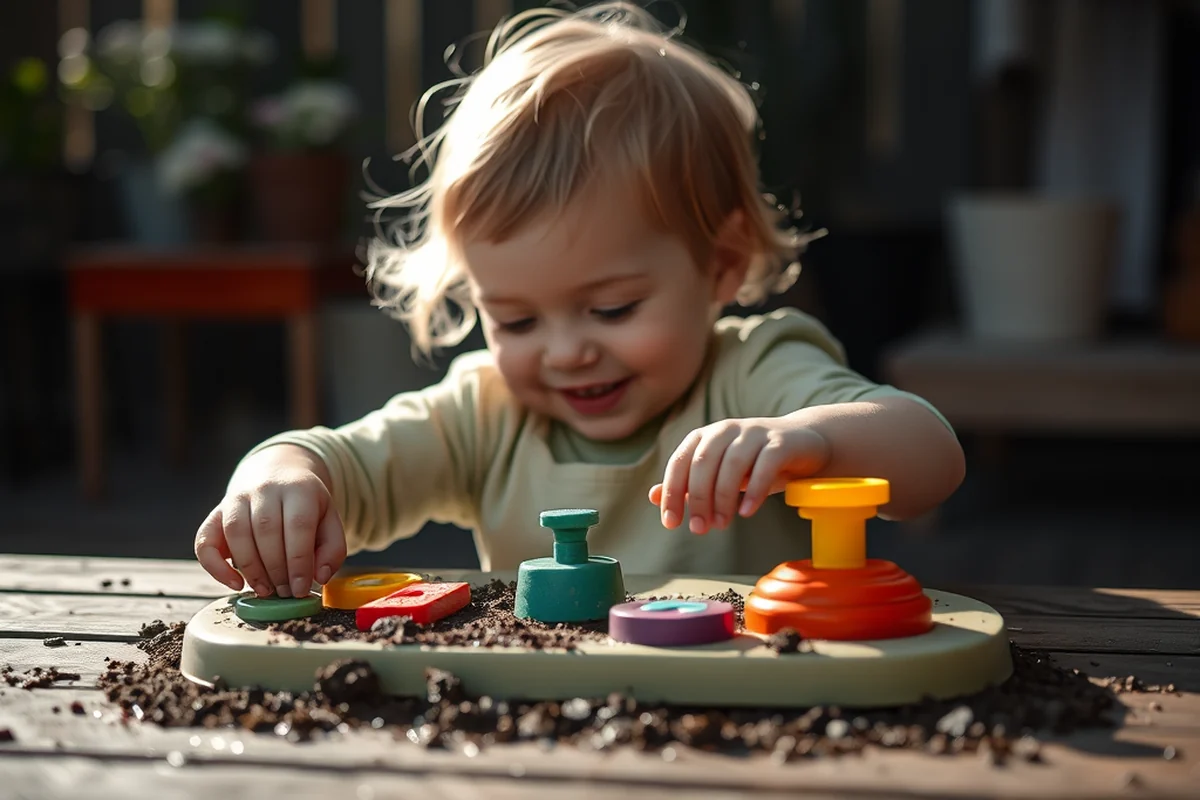
I started with basic items: buckets, a tarp, and a watering can. But as we played more, I realized that adding natural elements like sticks, leaves, stones, and even pinecones transformed the experience. My daughter began 'cooking' meals with ingredients she found in the yard, which taught her about texture, color, and even basic concepts of food and farming.
One day, she brought in a bunch of pebbles and declared them 'grains of salt.' Another day, she used a pinecone as a 'cake pan.' These moments were not only creative but also educational — they encouraged her to think about the world around her and how things can be used in different ways.
I've learned that the more natural materials you have on hand, the more engaged your child will be. The toddler outdoor mud kitchen becomes a place where the world becomes a toy, and the toy becomes a teacher.
The best materials are the ones we find in the dirt.
Related: Best mud kitchen for kids
Related: Mud kitchen outdoor art
Related: How To Mud Kitchen & Outdoor Art
Related: Kids mud kitchen ideas
Related: Outdoor mud kitchen diy
Related: Coloring Pages For Adults
Related: Outdoor Mud Kitchen For Kids
Related: Kpop Demon Hunters Coloring Pages
Related: Order Of Draw
Related: Mud Kitchen For Sale
Related: Spider Man Coloring Pages
Related: Outdoor Wooden Mud Kitchen
Related: Outdoor Mud Kitchen Preschool
Related: Outdoor Mud Kitchen For School
Setting Up Your Outdoor Kitchen
I set up my first mud kitchen in the back corner of our yard, using a tarp as a base to keep the area contained. I found two large buckets online for $15, and a few more items from our garage. The setup took about 30 minutes, and now it's a fixture in our daily routine.[2]
I like to make sure the area is flat and protected from the wind, which makes it easier for my daughter to work with the mud without it being blown away. I also place a few different tools nearby — small shovels, spoons, and even a sieve — to encourage experimentation and creativity.
The beauty of this setup is that it doesn't require much. You can build one in a corner of your yard, on a deck, or even in a park. What matters is that it's a space where your child can explore freely and safely.
I always invite my husband or my parents to join our mud kitchen sessions. It's a great way to bond as a family and to show my daughter that messy play is something we all enjoy together.
“I'll never forget the day my daughter dug her hands into the cool, damp earth and said, 'Mama, this is better than the sandbox!' It…”— Messysenses editors
The Benefits of Outdoor Play
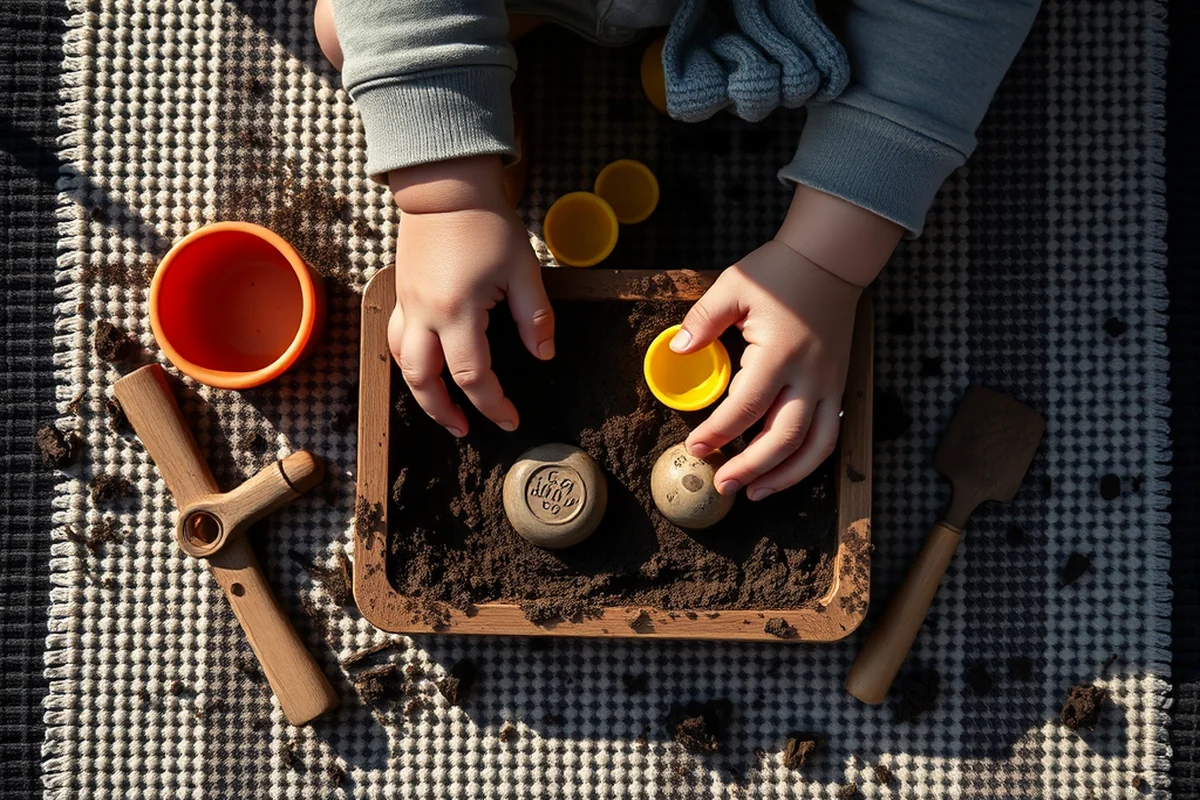
As my daughter spent more time in our mud kitchen, I noticed that she was more active, more engaged, and more confident. The physical act of digging, pouring, and shaping the mud helps develop gross motor skills, while the emotional rewards of creating something come from a place of pride and accomplishment.
I've also seen a marked improvement in her attention span and focus. She can now sit for 15–20 minutes at a time, fully immersed in the activity, without needing constant redirection. This is a huge shift from her earlier behavior, where she would move from one toy to another every few minutes.
There's also a deep sense of satisfaction that comes with outdoor play. My daughter says she 'feels happy' and 'feels strong' after a session, and I've noticed that she's more resilient in other areas of her life too. The toddler outdoor mud kitchen has become a place of growth, not just of fun.
Making It Safe and Sustainable
I always make sure that the area is free from sharp objects, broken glass, or anything that could cause injury. I also use only natural, non-toxic materials — no chemicals, no dyes, just the earth and water. This keeps the space safe for my daughter and the environment.
I've learned that it's important to check the area regularly for any potential hazards and to clean up after each session. This not only keeps the space safe but also shows my daughter the importance of taking care of the environment and respecting shared spaces.
I also make sure to use only natural water sources, like rainwater or a garden hose. This helps keep the experience sustainable and eco-friendly. The toddler outdoor mud kitchen is not only a place of play — it's a way to teach my daughter about nature and responsibility.
The Joy of Family Involvement
I've found that the most rewarding moments come when my husband or my parents join in. We all get muddy, we all laugh, and we all feel a sense of connection that's hard to find elsewhere. It's a space where the rules don't matter, and where the only thing that matters is the joy of playing together.
One of the best things about this setup is that it's inclusive. Whether it's my daughter, my husband, or my parents, everyone can find a role in the play. Some people might be 'cooking,' others might be 'cleaning up,' and others might just be enjoying the mess — but there's no right or wrong way to participate.
The toddler outdoor mud kitchen has become a place where we can be silly, where we can be creative, and where we can be together. It's not just about the play — it's about the memories we're creating and the love we're building.
Messy together, happy forever.
The Lasting Impact of a Mud Kitchen
As my daughter grows, I've noticed that the skills she developed in the mud kitchen are still with her. She's more confident, more creative, and more curious. She uses the same problem-solving skills she learned in the mud kitchen when she's trying to solve a puzzle or build a tower.
She's also more willing to take risks and try new things — something that's crucial for learning and growth. When she was younger, she would be hesitant to try new activities, but now she's more willing to explore, to experiment, and to learn from her mistakes.
The toddler outdoor mud kitchen has become more than just a play space — it's a foundation for her development. It's a place where she can be herself, where she can make mistakes, and where she can grow. And I'm so grateful that I created this space for her.
🌱 Gentle Start
Start with a small, simple setup and gradually expand as your child grows more comfortable with the mess.
⏱️ Fast-Track Setup
Use pre-made kits or store-bought items to set up your mud kitchen quickly with minimal effort.
🧳 Travel/away-from-home
Create a portable version using lightweight tools and a large tarp that can be easily transported and stored.
👨👩👧👦 Multiples
Set up multiple stations to accommodate several children, allowing for cooperative play and shared creativity.
🔄 Regression Reset
Recreate the mud kitchen space after a period of separation or change to help your child feel grounded and connected.
| The mistake | Why it happens | The fix |
|---|---|---|
| Not checking the area for safety hazards before play. | Sharp objects or broken glass can cause serious injury. | Always inspect the play area before each session and remove any potential hazards. |
| Forcing the activity on the child if they're not interested. | This can create a negative association with play and reduce engagement. | Let the child lead the way. Offer options and allow them to choose how they want to play. |
| Not cleaning up after each session. | This can lead to clutter, safety issues, and a lack of respect for shared spaces. | Make cleanup a part of the routine. Involve your child in the process and teach them the importance of tidying up. |
Toddler Outdoor Mud Kitchen
Common Questions
What if my toddler is afraid of getting dirty?
How do I keep the area clean after play?
Can I do this in a small space?
What if my child gets frustrated with the mess?
Cite this guide
Messysenses (2026). Toddler Outdoor Mud Kitchen. https://messysenses.com/toddler-outdoor-mud-kitchen/
Feel free to cite or share this guide.