
Kids Mud Kitchen Ideas
📖 Table of Contents
- Setting the Scene for a Mud Kitchen
- The Power of Messy Play
- Incorporating Nature into the Mud Kitchen
- Encouraging Collaboration in the Mud Kitchen
- Keeping the Mud Kitchen Safe and Fun
- Extending the Fun with Themes and Pretend Play
- The Long-Term Benefits of a Mud Kitchen
- Make It Your Way
- Frequently Asked Questions
I remember the day my daughter dug her hands into the damp earth of our backyard and declared, 'This is my new kitchen!' It was messy, but it was also magical. That moment sparked the idea for our first mud kitchen, a place where creativity and play could flourish without the pressure of perfection. Kids mud kitchen ideas are more than just a fun activity — they're a doorway into learning, exploration, and unstructured joy.[1]
When I first tried building a mud kitchen, I was surprised by how quickly my kids transformed the space into a bustling hub of activity. They mixed, poured, and molded with the same enthusiasm they showed when playing with toys. It became clear that these mud kitchens were not just a way to get kids outside — they were a tool for developing skills like problem-solving, sensory awareness. Even early math concepts like volume and proportion.[2]
As a parent, I quickly learned that the best mud kitchens are the ones that evolve with the kids. Whether it's a tiny setup in the corner of the yard or a full-scale play area with buckets and tools, the key is to let the kids lead the way. Kids mud kitchen ideas are flexible, messy, and deeply rewarding — and that's why I'm sharing them with you now.[3]
Why You'll Love This Approach to Play
- It boosts sensory development through touch, texture, and smell.
- It encourages imaginative and collaborative play.
- It's a low-cost, low-maintenance way to engage kids.
- It gives parents a break while still providing structured fun.
Setting the Scene for a Mud Kitchen
As of August 2026, the first step is to choose a location — ideally, a spot that's flat, shaded, and easily accessible. I picked a corner of our backyard that had enough dirt and space for the kids to spread out. We used a small table and a few buckets to create the base, and from there, the kids took over.[4]
I made sure to have a few basic tools on hand, like spoons, cups, and small containers. These helped the kids mimic real kitchen activities without any pressure to cook. We also included a small area for 'washing' their hands and faces, which made cleanup easier and more playful.
Setting up a mud kitchen doesn't need to be complicated. I've seen kids as young as two years old engage with a simple setup, and the more materials you add, the more creative the play becomes. It's all about giving them the freedom to explore and build their own version of a kitchen.
Pick a spot that's near a hose or water source for easy cleanup. I always used the same corner of our backyard, and after a few months, the area became a well-loved part of our outdoor space.
The Power of Messy Play

Messy play is one of the most valuable activities for young children, and a mud kitchen provides the perfect environment for it. I noticed that my daughter became more confident in her movements as she learned to scoop, pour, and mix without fear of making a mess. This kind of play helps kids understand textures and develop fine motor skills in a fun and engaging way.
I was surprised by how much my kids learned from playing in the mud. They explored different consistencies, talked about what they were making, and even started to mimic real-life cooking scenarios. It was amazing to see how naturally they engaged with the activity without any prompting from me.
There's something about the mess that makes kids feel more free to experiment and try new things. I've seen my kids take risks in the mud kitchen that they wouldn't take with more structured play. It's a safe space for mistakes and a great way to build confidence.
Messy play is where the magic happens.
Related: Ideas for mud kitchen
Related: Toddler outdoor mud kitchen
Related: How to mud kitchen outdoor art
Related: Outdoor mud kitchen diy
Related: Easy diy mud kitchen
Related: Kids To Paint
Related: Dinosaur Coloring Pages For Kids
Related: Pottery Barn For Kids Furniture
Related: Hello Kitty Coloring Pages
Related: Free And Printable Coloring Pages For Kids
Related: Mud Kitchen Near Me
Related: Bluey Coloring Pages
Related: Making A Mud Kitchen
Related: What Is Coloring Book For Kids
Related: Mud Kitchen Ideas For Kids
Incorporating Nature into the Mud Kitchen
Including natural materials in the mud kitchen adds another layer of sensory engagement and creativity. I started collecting things like small twigs, pebbles, and dried leaves, and the kids loved using them in their 'cooking.' The texture and color of these items made the play more dynamic and engaging.
One of my favorite discoveries was using leaves as 'sauces' or 'spices' in their 'dishes.' It gave the play a new dimension and encouraged the kids to think more creatively about what they were making. The natural elements also helped them understand the world around them in a more tangible way.
I noticed that when I included natural materials, the kids were more focused and more likely to stay engaged for longer periods. It was like the mud kitchen became a mini ecosystem where they could explore and learn through play.
Collect different textures and colors from your backyard to add variety to the mud kitchen. I filled a small basket with twigs, leaves, and stones, and the kids loved using them in their play.
“I remember the day my daughter dug her hands into the damp earth of our backyard and declared, 'This is my new kitchen!' It was…”— Messysenses editors
Encouraging Collaboration in the Mud Kitchen
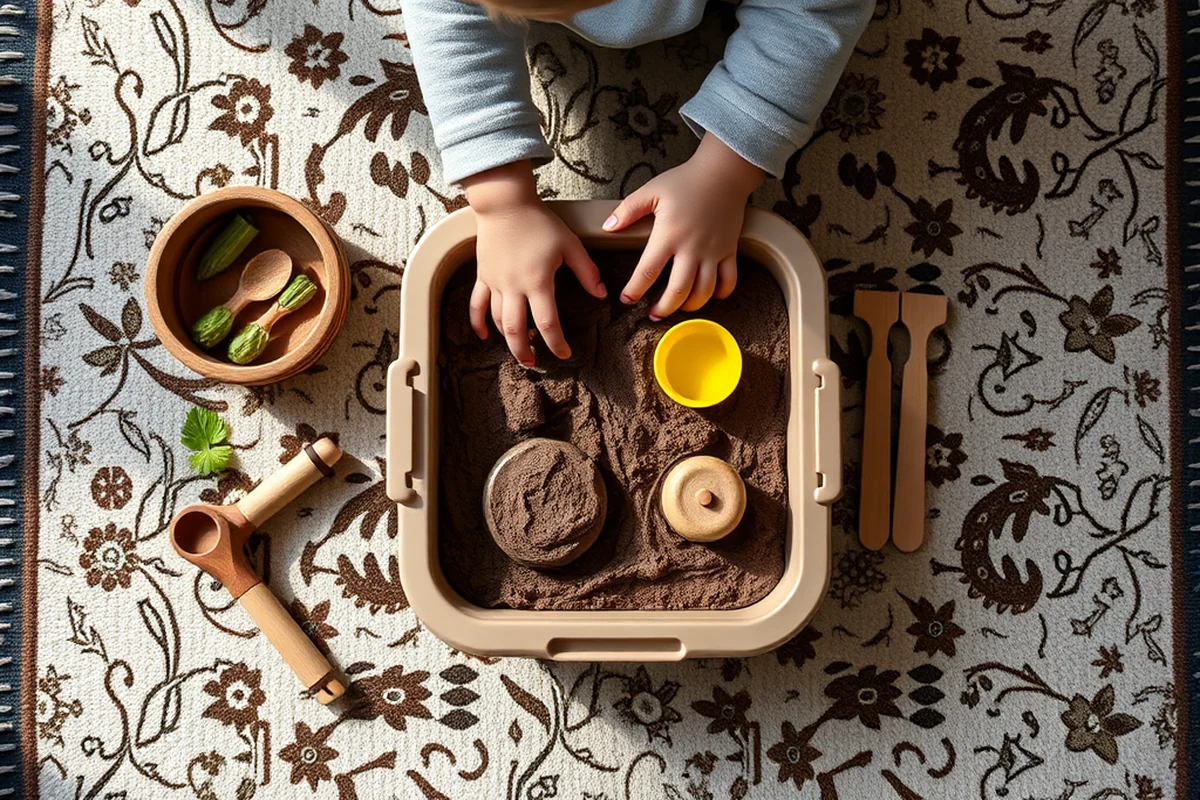
One of the most rewarding parts of the mud kitchen was watching my kids collaborate. They would take turns mixing, serving, and 'cleaning' the kitchen, and it became a space for teamwork and communication. I was amazed at how naturally they worked together, even when they had disagreements.
I noticed that the older sibling often took the lead, but the younger one would follow and contribute in their own way. It was a great way for them to practice sharing, listening, and compromising. I never had to step in to resolve conflicts — the kids handled it on their own.
Collaboration in the mud kitchen taught my kids how to communicate and solve problems together. It was a simple but powerful way for them to build social skills and learn the value of teamwork.
Keeping the Mud Kitchen Safe and Fun
Safety is always a top priority, especially when kids are playing with mud. I made sure the area was free of sharp objects and that the kids knew to stay away from the edges. I also kept a first aid kit nearby in case of minor scrapes or cuts.
I found that setting a few simple rules made the experience safer and more enjoyable for everyone. For example, we agreed that they could only use the tools we provided and that they had to clean up after themselves. These rules helped keep the play focused and respectful.
By keeping the space safe and the rules simple, the kids were able to enjoy the mud kitchen without any unnecessary stress. It became a place where they could be creative and explore without fear of getting hurt.
Extending the Fun with Themes and Pretend Play
Introducing themes like a pizza restaurant, a bakery, or a science lab added a new level of excitement to the mud kitchen. I noticed that the kids would get more invested in their play when there was a specific theme to follow. They loved pretending to be chefs or scientists, even if they were just mixing mud.
One of our favorite themes was a 'space mission' where the kids imagined they were on a distant planet with limited resources. They used the mud as 'soil' from another planet and even created 'alien food' using leaves and stones. It was a great way to spark their imagination and creativity.
I found that themes helped the kids stay focused and engaged for longer periods. It was amazing to see how naturally they embraced different roles and used their imaginations to enhance the play experience.
A theme can turn mud into a galaxy of possibilities.
The Long-Term Benefits of a Mud Kitchen
Over time, I noticed that the mud kitchen was helping my kids develop important skills like problem-solving, creativity, and self-regulation. They learned how to handle challenges and make decisions without constant supervision. It was a natural way for them to grow and learn through play.
I also saw improvements in their social skills and communication abilities. The collaborative nature of the play encouraged them to talk, listen, and work together. It was a simple but effective way for them to build confidence and independence.
The mud kitchen became a space where they could explore, create, and learn at their own pace. It was a valuable part of their childhood that I never expected to be so beneficial.
🌱 Gentle Mud Kitchen
A calm, low-energy setup for younger kids or those who prefer quieter play.
⚡ Fast-Track Mud Kitchen
A quick, no-fuss setup for busy parents who want to get started right away.
🧳 Travel Mud Kitchen
A portable, lightweight version for use on trips or at parks.
👨👧👦 Multiples Mud Kitchen
A setup that can accommodate multiple kids and encourage group collaboration.
🔄 Regression Reset Mud Kitchen
A simple, flexible setup that can be used during times of change or transition.
| The mistake | Why it happens | The fix |
|---|---|---|
| Not setting boundaries or rules. | Without clear rules, kids may become overstimulated or lose focus. | Establish simple, clear rules like not using sharp objects and cleaning up after themselves. |
| Not keeping the space safe. | A lack of safety precautions can lead to injuries or accidents. | Always check the area for hazards and keep a first aid kit nearby. |
| Overloading the space with too many tools. | Too many options can overwhelm young children and reduce engagement. | Start with a few basic tools and let the kids choose what they want to use. |
| Trying to control the play too much. | Overdirecting the play can reduce creativity and make the kids feel restricted. | Let the kids lead the way and step in only when needed. |
Kids Mud Kitchen Ideas
Common Questions
How do I keep the mud kitchen area clean after play?
What age is best for a mud kitchen?
Do I need to buy a lot of equipment for a mud kitchen?
How can I make sure the mud kitchen is safe for my kids?
References
- How to DIY an outdoor mud kitchen from pallet wood - Academia.edu (academia.edu)
- Immerse your kids in the unforgettable wonders of mud at Mud Day ... (blog.cstx.gov)
- Children's Center Outdoor Classroom Project - Boise State University (boisestate.edu)
- A Guide to Children's Activities | Oklahoma State University (botanicgarden.okstate.edu)
Cite this guide
Messysenses (2026). Kids Mud Kitchen Ideas. https://messysenses.com/kids-mud-kitchen-ideas/
Feel free to cite or share this guide.