
The Forest Drawing
📖 Table of Contents
I still remember the first time I saw my daughter's 'forest drawing' — a sprawling, chaotic canvas of green, brown. Blue, filled with crooked trees, lopsided birds, and a blob of yellow that she insisted was a 'happy sun.' It wasn't perfect, but it was alive. That drawing wasn't just a piece of paper with crayon smudges; it was a window into her imagination, her fears, and her joy. The forest drawing became a recurring theme in her art, and over time, I learned that it wasn't just about creativity. It was a powerful tool for emotional expression, problem-solving, and even early learning.[2]
As a parent, I found myself drawn into the world of the forest drawing, not just as an observer but as a participant. I began to notice how my daughter would use the forest to tell stories — about lost animals, magical creatures, or even her own fears of being alone. These drawings weren't just a child's play; they were a form of communication that transcended words. The forest drawing became a bridge between us, a way for her to express what she couldn't say out loud and for me to understand her in ways I hadn't imagined.[3]
What started as a simple crayon doodle evolved into a daily ritual. We'd sit together, sometimes for 15 minutes, sometimes for an hour, and I'd watch her transform that blank page into a world of her own making. The forest drawing taught me patience, curiosity, and the power of listening — not just to her words, but to the colors, the lines, and the spaces she left empty. The forest drawing became more than just art; it became a mirror to her inner world, and it helped us grow closer in a way I never expected.[1]
Why You'll Love This Forest Drawing Ritual
- Encourages emotional expression and self-awareness in children
- Strengthens parent-child bonds through shared creative time
- Fosters creativity, problem-solving, and storytelling skills
- Provides a safe outlet for children to explore fears and joys
The Forest as a Mirror of Emotions
As of October 2026, the forest in my daughter’s drawings was not just a collection of trees and animals; it was a reflection of her inner world. Sometimes, the trees were tall and proud, other times, they were twisted and broken. When she drew a storm cloud, it meant she was feeling anxious or overwhelmed. I learned to ask her, 'What is the forest saying today?' and she would often surprise me with her insights. This ritual taught me that the forest drawing could be a powerful tool for emotional literacy and early coping skills.[4]
One day, she drew a forest with no trees — just a vast, empty space. When I asked her about it, she said, 'There’s no forest today because I feel lonely.' I didn’t know how to respond then, but this drawing gave me a starting point. We talked about how it felt to be lonely, and she even suggested we draw a new forest together the next day. This simple act helped her process her feelings and made me a better listener.
Over time, I noticed that the more she used the forest drawing to express her emotions, the more confident she became in communicating with me. The forest became a safe space where she could explore her feelings without fear of judgment. It was one of the most valuable lessons I ever learned as a parent — that sometimes, the best way to help a child is to simply listen and understand.
When your child draws, resist the urge to fix or redirect. Ask open-ended questions like, 'What is this tree doing?' or 'What happens next in this forest?' This shows you're interested in their world, not just their art.
How the Forest Drawing Encourages Problem Solving
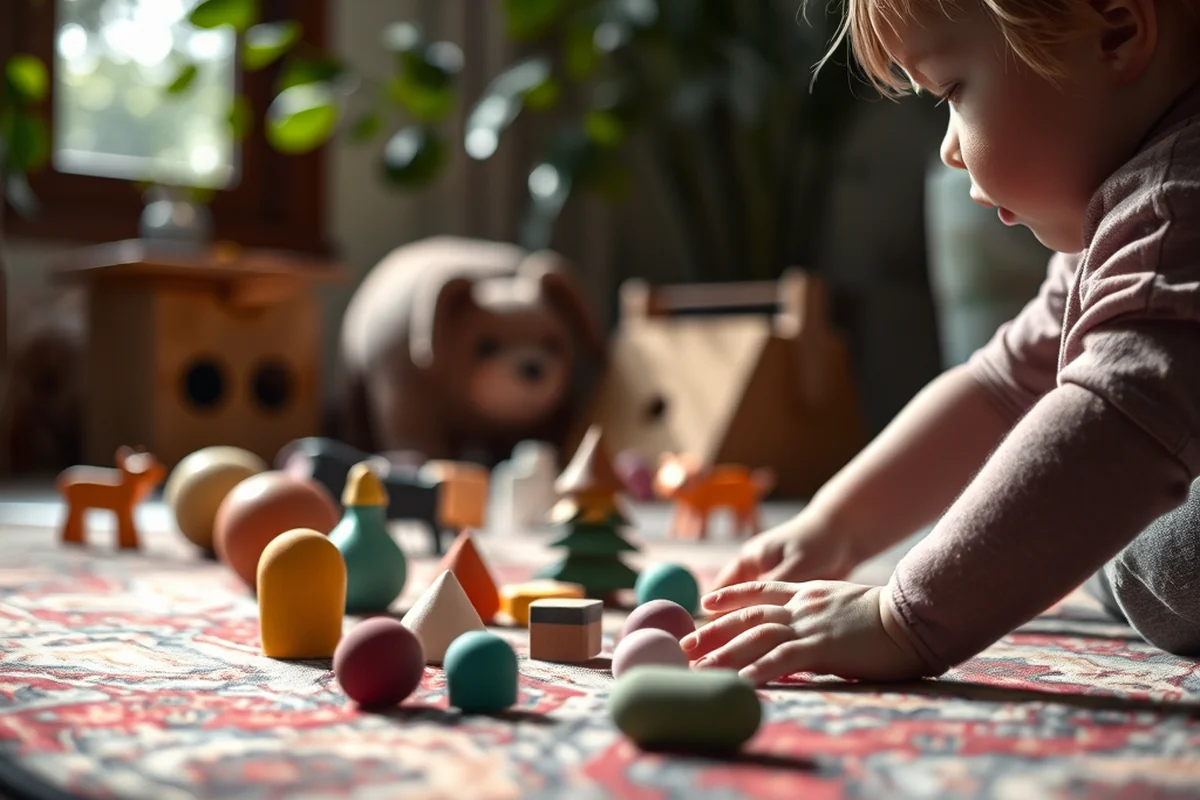
In my daughter’s drawings, the forest often became a place of adventure and problem solving. One day, she drew a path through the forest that ended in a big, dark cave. When I asked what happened in the cave, she said, 'A monster lives there. I have to find a way to get past it.' We talked about how she might solve this problem — building a bridge, using a flashlight, or even making friends with the monster. These conversations helped her think creatively and build resilience.
Another time, she drew a forest with a river in the middle. She told me that the river was too big to cross, so we brainstormed solutions together. We decided to build a boat or find a bridge. This exercise in problem solving was happening on a blank piece of paper, but it had a real impact on her confidence. She was learning to think through challenges and find solutions, even in the face of something as daunting as a river.
What surprised me most was how she began to apply these problem-solving skills to real-life situations. If she was stuck on a puzzle or had a disagreement with a friend, she would say, 'Let me think like the forest — there must be a way through.' This simple drawing ritual helped her develop a mindset of curiosity and resilience that would serve her for years to come.
The forest is the first place where children learn they can be the hero of their own story.
Related: Children s mud kitchen ideas
The Forest as a Storytelling Tool
Every forest drawing became a story for my daughter — sometimes a tale of adventure, other times a simple day in the life of a magical creature. She would start with a few lines and then fill in the details, adding characters, settings, and even plot twists. This became a way for her to explore narrative structure, character development, and even cause and effect.
One day, she drew a forest with a castle at the top of a hill. When I asked what the castle was like, she said, 'It's a place where the trees are tall and the sky is purple.' She went on to describe the people who lived there — a king with a crown made of leaves and a queen who could talk to the birds. This storytelling exercise was not only fun but incredibly educational. She was developing language skills, creativity, and the ability to construct coherent narratives.
As a parent, I found that listening to her stories helped me understand her imagination and even her fears. When she told me about a forest with a 'lost bear,' I knew she was grappling with feelings of separation or loneliness. This was a way for her to explore these emotions in a safe, creative space.
Ask your child, 'What is the story of this forest?' or 'What happens if the bear is lost?' This encourages narrative thinking and helps them explore their own ideas in a structured way.
“I still remember the first time I saw my daughter's 'forest drawing' — a sprawling, chaotic canvas of green, brown, and blue, filled with crooked…”— Messysenses editors
Related: How to build a mud kitchen
The Forest Drawing as a Learning Tool
In the beginning, I didn’t realize how much my daughter was learning through the forest drawing. She wasn’t just making art — she was learning. She was experimenting with color, texture, and even spatial awareness. She would draw a tall tree and then say, 'This tree is bigger than that one.' She would mix red and green to make brown, or use blue for the sky and yellow for the sun.
Over time, I noticed she was starting to use more complex shapes — circles for the sun, triangles for trees, and even zig-zag lines for rivers. She was learning about patterns and how to represent the world around her in a visual way. This was an early form of literacy, but not the kind that involves letters — it was visual and spatial.
I also noticed that she was developing a sense of scale and perspective. She would draw a forest and then add a tiny person in the corner to show how small they were in comparison. This was a real-world application of size and distance, and it was happening in the most natural way — through play and art.
Related: Free plans for kids outdoor mud kitchen
The Forest Drawing and Emotional Resilience
Through the forest drawing, I saw my daughter become more resilient. When she was upset, she would draw a forest with storm clouds, and when she was happy, she would draw a sunny day with birds flying. These drawings became a way for her to process her emotions and find a sense of balance.
One day, she drew a forest with a big, broken tree in the middle. When I asked about it, she said, 'The tree is hurt. I don’t know how to fix it.' I told her that sometimes, even if you can’t fix something, you can still care for it. We talked about how trees can heal and how people can heal too. This was a powerful moment for her — it taught her that it’s okay to feel broken and that healing is possible.
Over time, I saw her use this lesson in real life. When she faced a difficult situation at school or with friends, she would say, 'I need to be like the forest — even if the tree is hurt, it can still grow.' This mindset became a cornerstone of her emotional resilience. It all started with a simple forest drawing.
Related: Easy diy mud kitchen
The Forest Drawing as a Bonding Experience
What started as a simple activity quickly became a bonding experience. We would sit together for hours, sometimes just drawing in silence, other times talking about the stories in the forest. It was a time of deep connection, where we could be fully present with each other without distractions.
One of my favorite moments was when we created a 'shared forest' — a drawing we both contributed to. She would draw a tree, and I would add a river. She would draw a bird, and I would add a bridge. It was a way for us to work together, to collaborate, and to see the world through each other’s eyes.
This shared experience helped us build trust and understanding. It was a way for her to feel heard and seen, and for me to understand her in a way that no other activity could. The forest drawing became more than just art — it became a language we both spoke.
The forest drawing is not just a child’s art — it's a shared language between parent and child.
Related: How to make a mud kitchen
The Forest Drawing as a Creative Outlet
The forest drawing was a canvas for my daughter’s imagination — a place where she could try new things, make mistakes, and explore without fear. She would experiment with different colors, use unconventional tools like cotton swabs, or even draw with her feet. This was a way for her to push boundaries and express her individuality.
One day, she decided to draw a 'magic forest' with floating trees and talking animals. She used blue and purple crayons to create a dreamy, surreal landscape. When I asked her about it, she said, 'This is a place where the trees can fly and the animals can talk. It’s my special place.' This was a powerful moment — it showed me how creative she was and how much she needed to express herself.
This kind of creative freedom is invaluable for children. It helps them develop confidence, think outside the box, and see the world in new ways. The forest drawing became a place where she could be herself, explore her ideas, and even discover new interests — like drawing, storytelling, or even science.
🌿 Gentle Approach
A slow, unhurried way to explore the forest drawing, ideal for children who need more time to process and express their thoughts.
⚡ Fast-Track Approach
A quick, focused session that fits into busy schedules while still allowing creativity and expression.
🌍 Travel/away-from-home Approach
A portable and flexible way to keep the forest drawing alive even when you're on the go, using digital tools or lightweight materials.
👶 Multiples Approach
A way to adapt the forest drawing for siblings or multiple children, allowing for shared creativity and collaboration.
🔄 Regression Reset Approach
A method to revisit the forest drawing during times of change, helping children process transitions and emotions through creative expression.
| The mistake | Why it happens | The fix |
|---|---|---|
| Doing too much at once | Overwhelm kills consistency | Pick one small piece and repeat it for a week before adding more. |
| Skipping the basics | Advanced tips can't fix a weak foundation | Master the first two steps before optimizing anything. |
The Forest Drawing
References
- Cocktail Construction Chart - National Archives (archives.gov)
- The Blue Forest | The Art Institute of Chicago (artic.edu)
- 'Spirits of the Forest': Anthropology Students Mount UVA Exhibition ... (as.virginia.edu)
- Painting of Petrified Forest National Park | Arizona Memory Project (azmemory.azlibrary.gov)
Cite this guide
Messysenses (2026). The Forest Drawing. https://messysenses.com/the-forest-drawing/
Feel free to cite or share this guide.