
Toddler Playdough & Clay Ideas
📖 Table of Contents
- The Magic of Messy Play
- Choosing the Right Playdough and Clay
- Creative Playdough Activities for Toddlers
- Playdough and Clay for Sensory Development
- Playdough and Clay as a Learning Tool
- Playdough and Clay for Emotional Development
- Playdough and Clay as a Bonding Activity
- Make It Your Way
- Frequently Asked Questions
I remember the day my toddler son first squeezed playdough between his fingers, his eyes wide with fascination. It was messy, it was loud, and it was magic. That moment stuck with me, and it was the start of my journey into the world of toddler playdough and clay ideas. I’ve tried so many different approaches over the years — from store-bought playdough to homemade clay — and I’ve learned what works, what doesn’t. What makes the difference with engaging a curious little mind.[3]
One of the hardest parts of parenting is finding activities that are both stimulating and safe for toddlers. Playdough and clay are perfect for this, offering a tactile experience that helps with motor skills, creativity, and even emotional development. I’ve seen my son go from hesitant pinching to confidently rolling out snakes and balls, all while laughing and exploring the textures around him. It’s not just play; it’s learning, and it’s happening in the most natural way possible.[4]
I’ve spent hours testing different types of playdough and clay, from the ones that are non-toxic and washable to the ones that can be used for more advanced projects. I’ve also learned that the right tools and accessories can make a huge difference in how much a toddler enjoys the activity. Whether it’s cookie cutters, rolling pins, or sensory add-ins, each element has a purpose and a place in the world of toddler playdough and clay ideas.[5]
Why You'll Love This Article
- Discover creative, safe, and mess-free toddler playdough and clay ideas that spark imagination.
- Learn practical, step-by-step techniques that are easy to implement at home.
- Find out how playdough and clay can support your toddler's development in unexpected ways.
- Get inspired with a variety of activities that keep your toddler engaged for hours.
The Magic of Messy Play
As of August 2026, there’s something about the squish of playdough that just feels right. I’ve watched my toddler dig into a ball of dough, only to look up and say, 'Look, Mama! It’s a dinosaur!' It’s those moments that make all the mess worth it. Messy play isn’t just about getting dirty — it’s about exploration, problem-solving, and learning through touch. The more textures and colors a toddler can interact with, the more their brain develops.[1]
I’ve found that even the most simple playdough activities can lead to major developmental milestones. When I introduced my son to playdough with different textures — some smooth, some bumpy — he started recognizing the differences and even naming them. It was like a new world opening up for him. I didn’t know that sensory play could be so powerful, but I’ve since learned that it helps with hand-eye coordination, fine motor skills, and even emotional regulation.
Now, I’ve developed a few go-to activities that I use with my toddler almost every day. One of them is making a 'playdough volcano' with baking soda and vinegar — not for the chemical reaction, but for the sensory experience. My toddler loves the fizzing, the squishing, and the way the color changes. It’s not only fun, but it’s also teaching him about cause and effect in a way that’s tangible and memorable.
If your toddler is making a mess, take a deep breath. The best way to handle it is to stay calm and let them explore. Later, you can clean up together — it’s a bonding experience.
Choosing the Right Playdough and Clay

Not all playdough and clay are created equal. I’ve learned through trial and error that some products are more durable, while others dry out quickly. When I first bought a brand that promised 'non-toxic' and 'washes off easily,' I was thrilled — until I realized that it was actually a chalk-based dough that turned to dust after a few uses. It was a big learning curve, but I’ve since found a few reliable brands that last.
I’ve settled on two main types of playdough: one that’s a soft, malleable dough that’s perfect for shaping and molding. Another that’s a thicker, more clay-like texture that can be used for more advanced projects. The soft dough is ideal for little hands, while the clay is better for older toddlers who can manage the texture. I also look for products that are non-toxic and free from harmful chemicals, which is a must for any family with young children.
Another thing I’ve learned is that it’s important to choose products that are safe to use in a variety of settings. My toddler enjoys playing with his playdough both on the kitchen table and on the floor — so I’ve made sure to find a type that’s easy to clean up. For me, the best playdough is one that’s washable, long-lasting, and engaging enough to keep a toddler occupied for at least 20 minutes at a time.[2]
Choose quality over quantity — your toddler will thank you.
Related: Clay dough for kids
Related: Children playing with playdough
Related: Is play dough clay
Related: Playdough Ideas For Preschool
Related: Child playing with playdough
Related: Crayola Coloring Pages
Related: What Is Color Sheets
Related: Bluey Coloring Pages
Related: Fairy Coloring Pages
Related: Toddler Safe Playdough Recipe
Related: How To Sketch Ideas
Related: How To Make Playdough For Kids
Related: Hello Kitty Coloring Sheets
Related: Toddler Playdough & Clay For Beginners
Related: Toddler Playdough & Clay Tips
Related: Toddler Playdough & Clay For Toddlers
Creative Playdough Activities for Toddlers
One of my favorite things about playdough is the way it opens the door to creativity. I’ve introduced my toddler to simple shape-making with cookie cutters, and he’s been amazed by the different forms he can create. He started with circles and squares, then moved on to stars and hearts — each one a new discovery. It’s not just about the shapes, though — it’s about the way he talks through the process, describing what he’s making and why.
I’ve also found that playdough can be a great tool for storytelling. My toddler and I have started making 'playdough stories' together, where we create characters and scenes out of playdough. We’ve made a castle, a spaceship, and even a dinosaur. It’s amazing to see how his imagination takes off with each new creation, and it’s even more rewarding to see him share those stories with others.
Another fun activity I’ve introduced is making patterns with playdough. We’ve rolled out long snakes and then cut them into pieces to create a pattern — like alternating colors or sizes. It’s not only fun, but it also helps with counting and recognition, which are important developmental skills. I’ve found that these kinds of structured activities can be a great way to keep a toddler engaged for longer periods of time, especially when they’re having a tough day.
Use items like bottle caps, straws, or even spoons as tools for shaping and pressing playdough. It’s a great way to repurpose household items and keep your toddler engaged.
“I remember the day my toddler son first squeezed playdough between his fingers, his eyes wide with fascination.”— Messysenses editors
Playdough and Clay for Sensory Development
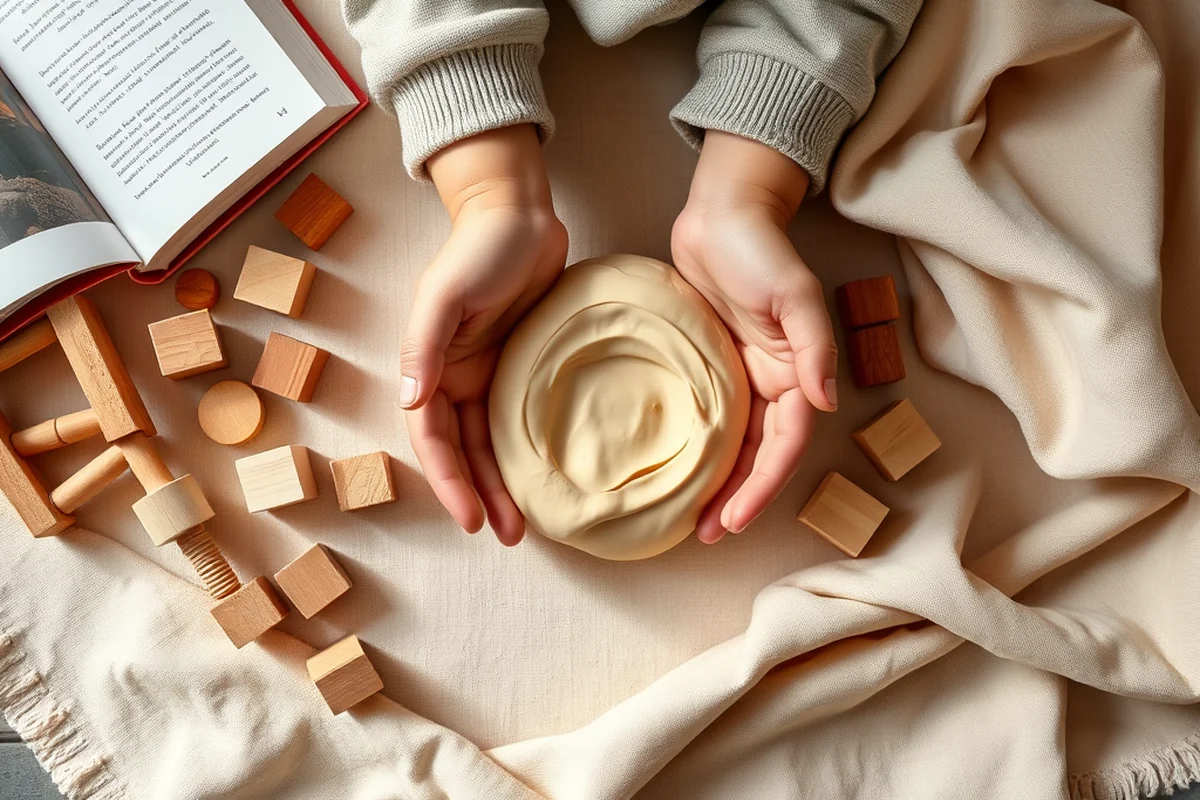
Sensory play is one of the most important aspects of early childhood development, and playdough and clay can be used in a variety of ways to engage a toddler’s senses. I’ve started adding different textures to our playdough, like sand, beads, or even dried beans, to make the experience more engaging. My toddler loves the way the dough feels when he adds these elements — it’s like a whole new world of exploration for him.
I’ve also discovered that using different colors can be a powerful sensory tool. I’ve bought a set of playdough that comes in a variety of colors, and we’ve used them to create rainbow patterns and color-matching games. My toddler has started recognizing colors more quickly, and it’s been a fun way for us to spend time together. I’ve even noticed that he’s more willing to try new colors when he sees the way they look together.
Another thing I’ve started doing is incorporating temperature changes into our playdough activities. Sometimes we’ll use a small plastic bowl filled with water and let the dough sit in it for a while, then let it air dry. It’s a simple way to introduce the concept of temperature and how it affects the texture of the playdough. My toddler has been fascinated by this, and it’s been a great opportunity to talk about science in a way that’s both fun and educational.
Playdough and Clay as a Learning Tool
I’ve been surprised by how many learning opportunities playdough and clay can provide. One of the simplest ways to use them is for teaching shapes and colors. I’ve started using playdough to create different shapes — circles, triangles, and squares — and then asking my toddler to identify them. It’s a simple activity, but it’s been incredibly effective in helping him recognize and name shapes.
Another way I’ve used playdough is to introduce early math skills. We’ve been working on counting, sorting, and even simple addition and subtraction with playdough. I’ll roll out a certain number of playdough balls and ask my toddler to count them, then add or take away a few and see if he can figure out the new total. It’s been a fun way for him to practice math without it feeling like a chore.
I’ve also found that playdough can be used to teach concepts like symmetry and patterns. We’ve been using playdough to create symmetrical shapes — like making two identical halves of a butterfly — and it’s been a great way for my toddler to understand the concept of balance. It’s amazing how much he’s learned through these simple activities, and I’ve been impressed by how quickly he’s picked up on these concepts.
Playdough and Clay for Emotional Development
I’ve been surprised by how much playdough and clay can help with emotional development. One of the easiest ways to use them for this is by creating 'feelings faces' — using playdough to make different facial expressions that represent different emotions. My toddler has been fascinated by this, and it’s been a great way for us to talk about feelings and emotions in a safe and engaging way.
I’ve also found that playdough can be a great tool for helping toddlers process difficult emotions. When my toddler was having a tough day, I let him create a 'feeling monster' out of playdough — something that looked angry or sad. Then, we talked about what the monster was feeling and how we could help it feel better. It was a way for him to express his emotions in a way that felt safe and manageable.
Another thing I’ve noticed is that playdough can be a great way for toddlers to develop emotional regulation. When my toddler is upset or frustrated, I’ll let him use the playdough to 'mash' his feelings out — literally squishing and pressing the dough as a way to release his emotions. It’s a simple but powerful way for him to process his feelings and learn how to manage them in a healthy way.
Playdough is more than just fun — it's a powerful tool for emotional development.
Playdough and Clay as a Bonding Activity
One of the most rewarding parts of using playdough and clay with my toddler has been the bonding experience. I’ve found that it’s a great way to spend quality time together, and it’s been amazing to see how much he enjoys our shared playtime. I’ve started setting aside a specific time each day for us to play with playdough, and it’s become one of our favorite traditions.
I’ve also found that playdough can be a great way to encourage collaboration and teamwork. When we play with playdough together, my toddler and I have started working on bigger projects — like building a playdough city or creating a whole scene with different characters. It’s been a great way for us to work together and share ideas, and I’ve seen his confidence grow as he takes on more responsibility in our projects.
Another thing I’ve noticed is that playdough and clay can be a great way to create lasting memories. I’ve started taking photos of our playdough creations, and it’s been amazing to look back on them and see how much my toddler has grown. These simple moments have become some of my favorite memories, and I know they’ll be ones we’ll look back on with fondness for years to come.
🧸 Gentle Play
Ideal for toddlers with sensory sensitivities or those who need a calmer approach to play. Use soft, smooth playdough and avoid textures that might be overwhelming.
⚡ Fast-Track Fun
Great for busy parents looking for quick, high-energy activities. Use pre-made playdough and focus on simple, fast-paced games and challenges.
🧳 Travel/On-the-Go
Perfect for families who are always on the move. Choose portable, washable playdough that can be used in cars, hotels, or airports without causing a mess.
👨👩👧👦 Multiple Kids
Designed for families with multiple toddlers. Choose playdough and clay that can be shared and used by multiple children at the same time.
🔄 Regression Reset
Helps toddlers who are going through a developmental plateau or regression. Use playdough to re-engage them with familiar activities and reinforce skills they’ve lost.
| The mistake | Why it happens | The fix |
|---|---|---|
| Using the wrong type of playdough for a toddler’s age or developmental stage. | Some playdoughs are too hard, too sticky, or too small for a toddler to handle safely. | Choose playdough that’s appropriate for your toddler’s age and developmental level. Look for products that are easy to manipulate and non-toxic. |
| Not cleaning up after playdough sessions. | Playdough can leave a mess that’s difficult to clean up, especially if it’s been left on floors or furniture for too long. | Always clean up promptly after playdough sessions. Use a damp cloth or sponge to wipe down surfaces, and store playdough in airtight containers to keep it fresh for next time. |
| Overusing playdough without incorporating other activities. | While playdough is a great tool, it shouldn’t be the only form of play or learning for a toddler. | Balance playdough sessions with other activities like reading, outdoor play, or music to ensure a well-rounded development experience for your toddler. |
| Not engaging with your toddler during playdough time. | Playdough is not just about the toddler — it’s also an opportunity for bonding and learning. | Make sure to be present and engaged during playdough sessions. Ask questions, share ideas, and take part in the creative process to build a stronger connection with your toddler. |
Toddler Playdough & Clay Ideas
Common Questions
Is playdough safe for toddlers?
How often should I use playdough with my toddler?
Can playdough be used for older toddlers?
What are some good playdough storage solutions?
Cite this guide
Messysenses (2026). Toddler Playdough & Clay Ideas. https://messysenses.com/toddler-playdough-clay-ideas/
Feel free to cite or share this guide.
References
- Fun, Engaging Activities to Keep Children Busy at Home (ecec.ucmerced.edu)
- Early Literacy Foundations for Lifelong Learning (education.jhu.edu)
- Nebraska Transition to Kindergarten Toolkit and Resource Guide for ... (education.ne.gov)
- How Sensory Exploration Using Expressive Arts Provides a ... (digitalcommons.lesley.edu)
- 3 Play Activities That Help Manage Emotions (dws.wyo.gov)