
Easy To Make Playdough
📖 Table of Contents
- Why Homemade Playdough Is Better for Sensory Development
- Making Playdough: A Step-by-Step Guide
- Creating a Playdough Routine in Your Home
- Playdough as a Learning Tool
- The Benefits of Playdough for Emotional Regulation
- Playdough and the Importance of Play
- Making Playdough a Family Activity
- Make It Your Way
- Frequently Asked Questions
I remember the first time my son grabbed a handful of store-bought playdough and squeezed it until it turned into a messy pile on the floor. He looked up at me, eyes wide, as if I had just handed him the key to a new universe. That moment made me realize that playdough isn't just a toy — it's a sensory gateway that can spark creativity, relieve stress, and even teach small motor skills. But not all playdough is created equal. I’ve tested dozens of store-bought versions, and the truth is, many are too stiff, too sticky, or just not fun to handle. That’s why I started making my own — it’s easy to make playdough, and it’s worth every minute.[3]
Making playdough at home isn’t just about saving money; it’s about making something that feels just right for your child. I’ve found that homemade playdough has a texture that’s far more pliable and less prone to drying out, which means it lasts longer and stays more engaging. Plus, the process of making it together is an experience in itself. My son loves watching me mix the ingredients, and he gets excited every time we roll it out. It’s a simple, sensory-rich activity that we can do in under an hour, and it’s something we’ve done every single week since we started.[4]
The beauty of easy to make playdough is that it doesn’t require a lot of time, effort, or ingredients. I’ve simplified the process to the point where even my toddler can help — we just knead it together, and he’s in his element. It’s also a great way to encourage creativity, because we can mix in things like food coloring, glitter, or even small toys for extra fun. Over time, I’ve discovered that making our own playdough has become a ritual — not just for the play, but for the connection it builds. It’s not just playdough; it’s a way of bonding, learning, and exploring the world through touch.
Why You'll Love This Easy To Make Playdough
- You can control the texture, making it just right for your child’s needs.
- It’s a budget-friendly alternative to store-bought options.
- Making it together is a great way to bond and encourage creativity.
- It’s safe, non-toxic, and lasts much longer than commercial versions.
Why Homemade Playdough Is Better for Sensory Development
As of August 2026, I’ve noticed that store-bought playdough can be inconsistent — some brands are too dry, while others are overly sticky. This inconsistency can be frustrating for young children who are still learning how to manipulate textures. Homemade playdough, on the other hand, can be made to have a smooth, pliable feel that’s ideal for sensory development. My son has a sensitivity to certain textures, and I’ve found that homemade playdough is far more comfortable for him to handle.[1]
I’ve also noticed that homemade playdough lasts longer, which means we don’t have to replace it as often. This is especially helpful for kids who are in the middle of a sensory phase and need to engage with playdough for hours at a time. The durability of homemade playdough also means that it’s less likely to break apart or dry out, which is a common issue with many commercial versions.
Beyond the texture, the process of making playdough is itself a sensory experience. My son loves feeling the dough between his fingers as we mix it together. It’s a simple, yet powerful way to encourage sensory engagement, and it’s something that we can do over and over again without worrying about running out or losing a batch.
Mix in a few drops of essential oil or a pinch of salt to add a new dimension of sensory stimulation.
Making Playdough: A Step-by-Step Guide
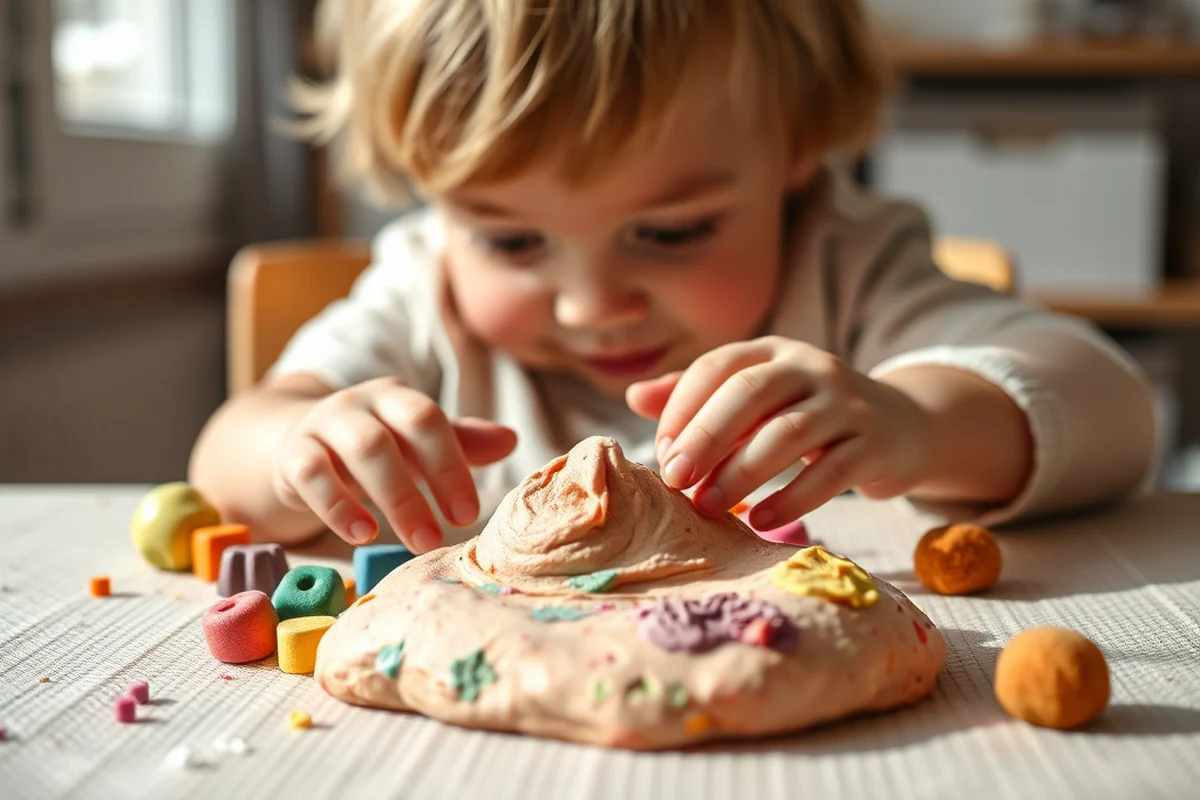
I’ve simplified the process to the point where even my toddler can help me mix the ingredients. All you need is a few tablespoons of flour, a bit of salt, and some water — the exact measurements aren’t crucial, as long as the mixture is pliable enough to work with. I’ve found that kneading the dough thoroughly is the key to getting it just right.
Once the dough is made, I usually let it rest for a few minutes before we start playing with it. This gives it time to firm up slightly, making it easier to shape. My son loves this step because he gets to sit and wait for the dough to be ready, which turns the whole process into an interactive experience.
After kneading, I always check the texture. If it’s too dry, I add a few drops of water and mix it in. If it’s too sticky, I add a bit more flour. This trial-and-error process is part of the fun, and it helps my son learn about textures in a hands-on way.
Playdough is the gateway to a world of creativity and sensory exploration.
Related: Playdough creative play ideas
Related: Easy toddler playdough clay
Related: Toddler playdough clay ideas
Related: Child Playing With Playdough
Related: Playdough ideas for preschool
Related: How To Make Playdough For Kids
Related: Easy Playdough Recipe For Kids
Related: How To Coloring Books For Adults
Related: What Is Easy Things To Draw
Related: What Should I Draw
Related: Coloring Pages For Adults
Related: What'S In The Bible Coloring Pages
Related: Kuromi Coloring Pages
Related: Elsa Coloring Pages
Related: Back To School Coloring Pages
Related: Playdough Toys For Toddlers
Related: How To Make Child Safe Playdough
Related: Easy Homemade Playdough Recipe For Kids
Related: How To Make Playdough Recipe For Kids
Creating a Playdough Routine in Your Home
I’ve found that setting aside a specific time each day for playdough helps my son get into a rhythm. We do it right after lunch, when he’s calm and ready for a quiet activity. I’ve also noticed that having a designated playdough area — like a small table or a corner of the living room — helps him focus and stay engaged.
I’ve also started using a timer to keep the session moving. We set it for 15 minutes, and I use that time to teach my son how to shape, roll, and stretch the dough. Once the timer goes off, we clean up together, which has helped him understand that playdough time is a special moment that comes to an end.[2]
This routine has not only made playdough time more enjoyable for my son, but it has also helped him develop a sense of structure and independence. He now knows that when the timer rings, it’s time to stop and clean up, which is a valuable life skill.
A simple kitchen timer can help your child understand the concept of time and when it’s time to move on to the next activity.
“I remember the first time my son grabbed a handful of store-bought playdough and squeezed it until it turned into a messy pile on the…”— Messysenses editors
Playdough as a Learning Tool
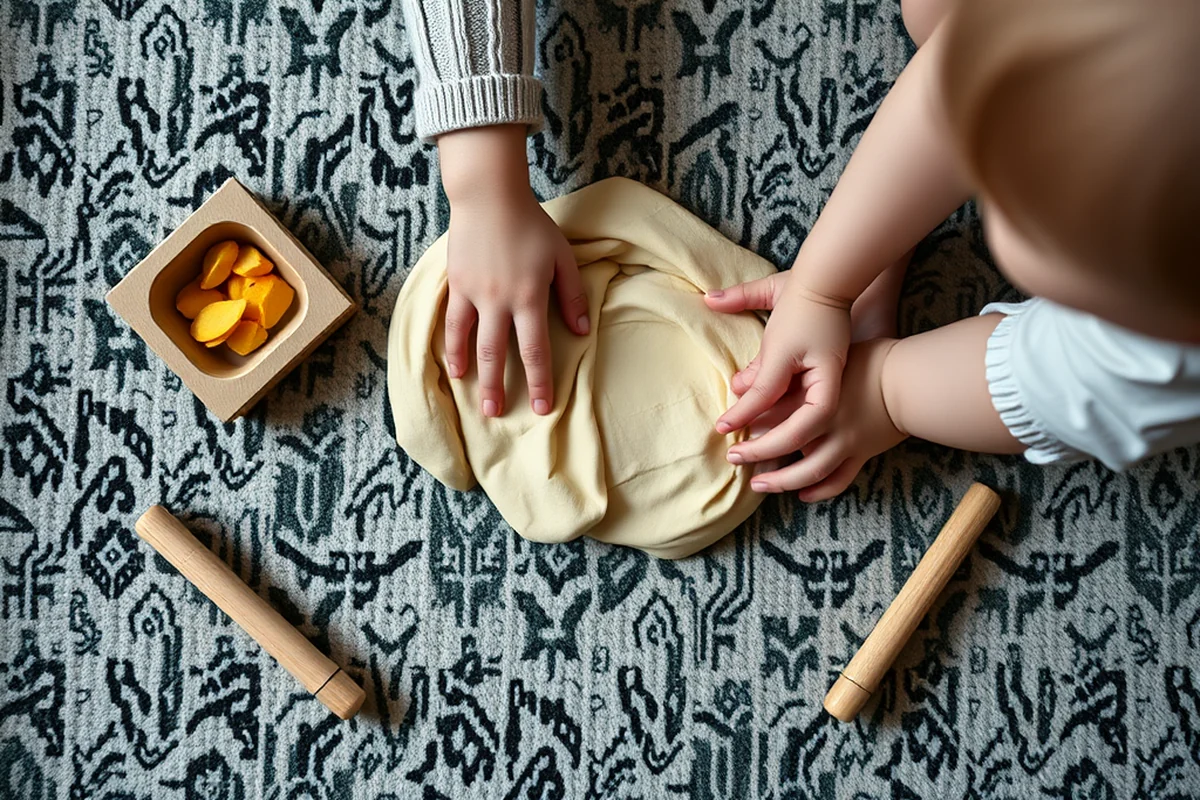
I’ve found that playdough is a great way to introduce new concepts to my son. For example, we use it to practice counting by making little balls and counting them together. We also use it to teach him about shapes by rolling out the dough and creating circles, squares, and triangles.
I’ve also used playdough to teach him about colors and textures. We mix in food coloring to create different colored balls and talk about how each color feels different in his hands. This has helped him understand that colors can be more than just visual — they can be felt as well.
Another way we use playdough for learning is by making letters and numbers. We press small toy letters into the dough and talk about what they look like. This has helped my son recognize letters and numbers in a fun and interactive way.
The Benefits of Playdough for Emotional Regulation
I’ve noticed that when my son is feeling overwhelmed or frustrated, playdough helps him calm down. He can push, pull, and stretch the dough, which gives him a physical outlet for his emotions. This has been especially helpful during transitions, like when it’s time to stop playing or when he’s upset about something.
I’ve also used playdough as a way to help him express his feelings. We talk about how the dough feels when we press it or stretch it, and I’ve noticed that he starts to associate different emotions with different textures. For example, when he’s happy, he says the dough feels soft, and when he’s upset, he says it feels stiff and hard.
This kind of emotional regulation through play is something I never expected from a simple ball of dough. It’s not just about the play; it’s about the emotional connection we build through it.
Playdough and the Importance of Play
I’ve always believed that play is the most important way my son learns. Playdough gives him the freedom to explore, create, and imagine without any rules or expectations. He can shape it into anything he wants — from animals to buildings to his favorite superheroes — and that kind of freedom is invaluable.
I’ve noticed that playdough has helped my son develop better focus and attention span. He can sit for longer periods of time when he’s engaged in play, which is something that’s been challenging for him in other activities. The tactile nature of playdough keeps him interested and motivated to continue playing.
More than anything, playdough has helped my son develop a sense of creativity and imagination. He’s started making up stories about the things he creates with the dough, and I love watching him bring his ideas to life.
Play is not just fun — it’s the foundation of learning and growth.
Making Playdough a Family Activity
I’ve started involving my husband in playdough time, and it’s been a game-changer. We all sit together and make different shapes, talk about what we’re creating, and share our favorite ideas. My son loves seeing his dad participate, and it’s helped create a stronger bond between them.
I’ve also noticed that involving the whole family in playdough time has made it more of a shared experience. We now take turns rolling the dough, shaping it, and even cleaning up together. This has taught my son the importance of cooperation and teamwork in a fun and natural way.
Most importantly, making playdough a family activity has turned it into more than just a toy — it’s a way for us to connect, laugh, and create memories together. It’s a simple activity that has brought us closer as a family.
🧸 Gentle on Sensitive Skin
Use a hypoallergenic mix with no harsh chemicals, perfect for children with sensitive skin.
⚡ Fast-Track Playdough
A quick version with no waiting time — ready to play in under 10 minutes.
🧳 Travel-Friendly Playdough
Make a compact, portable batch for on-the-go fun during car rides or trips.
👶 Playdough for Multiples
A batch that can be easily split and shared among siblings or friends.
🔄 Playdough Regression Reset
Use it to re-engage children who may have lost interest in sensory activities.
Easy To Make Playdough
Common Questions
Can I make playdough without using flour?
How long does homemade playdough last?
Is playdough safe for babies?
Can I freeze playdough to keep it fresh?
Cite this guide
Messysenses (2026). Easy To Make Playdough. https://messysenses.com/easy-to-make-playdough/
Feel free to cite or share this guide.
References
- April Web Artists Perhaps you wondered … (cmu.edu)
- DIY Playdough | Cobb County Georgia (cobbcounty.gov)
- The Effect of Playdough Game towards Creativity of Early Childhood (academia.edu)
- Purpose of playing with play dough - MSU Extension (canr.msu.edu)